Going Suborbital
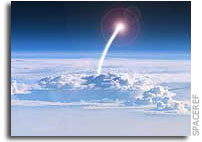 Next-Generation Suborbital Spaceflight: A Research Bonanza at 100 Kilometers, Alan Stern and the Suborbital Applications Researchers Group
“In 1946, when the U.S. Army formed its Rocket Research Panel, only a tiny fraction of the nation’s astronomers, atmospheric scientists, biologists and solar physicists appreciated the power that access to space would have on their research. Yet just a decade later, rocketborne research had become so powerful a tool that it formed the centerpiece of space efforts in 1957’s International Geophysical Year (IGY). Today, in late-2009, the research community is very much “in 1946″ regarding the powerful opportunities that next-generation suborbital vehicles like Virgin Galactic’s SpaceShipTwo, Blue Origin’s New Shepard, XCOR’s Lynx and others offer for research, education and public outreach (EPO) activities in space.”