
The Cancelled Ares V Team Has A New Rocket To Sell You

Congress Must Fully Fund the Space Launch System, Roll Call
“The SLS vehicle design materialized from an extensive, unbiased set of NASA technical studies that compared all possible scenarios, with a focus on efficiency and budget constraints. Experts inside and outside of NASA were fully integrated into the decision-making process. Among the factors driving the selection of the 130 metric-ton SLS design were human exploration requirements, the state of propulsion technology, the health and capability of the industrial base and the overall budget outlook.”
 Keith’s note: I had to read this several times. “Unbiased”? Hardly. I guess these guys think that if they say something often enough as an op ed it will become the truth. The SLS design was mandated in law by Congress to use Shuttle and Ares V leftovers so as to preserve jobs. NASA adjusted their plans to this mandate. Everything else was window dressing. To state otherwise is to spread false memories about things that never happened.
– More False Memories About the Origin (and Cost) of SLS, Earlier post

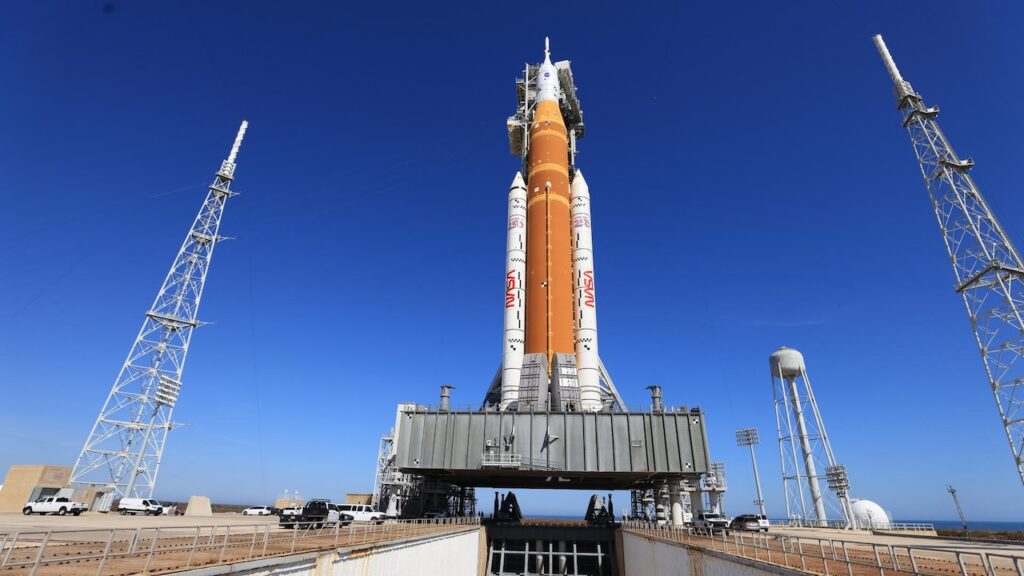
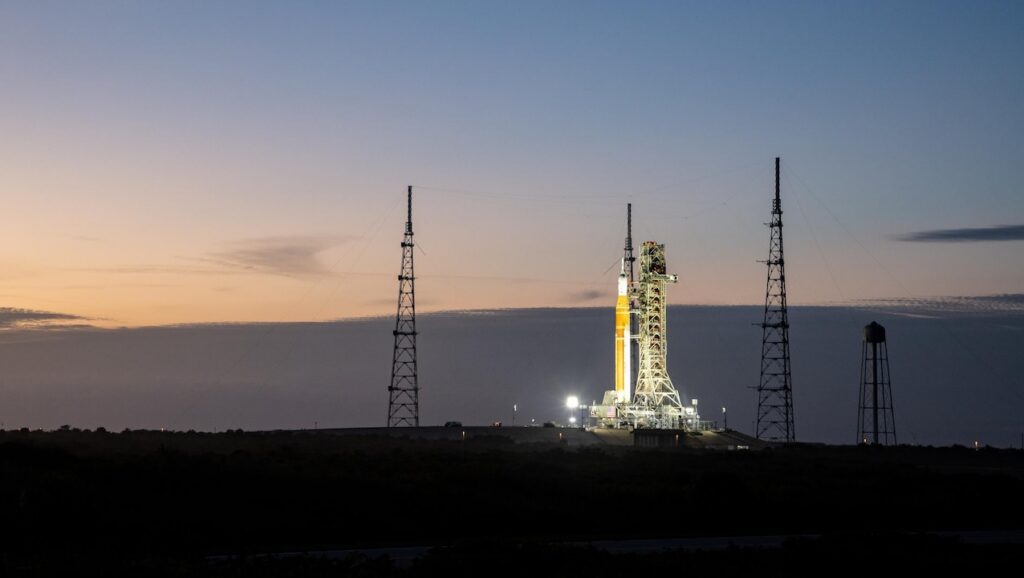

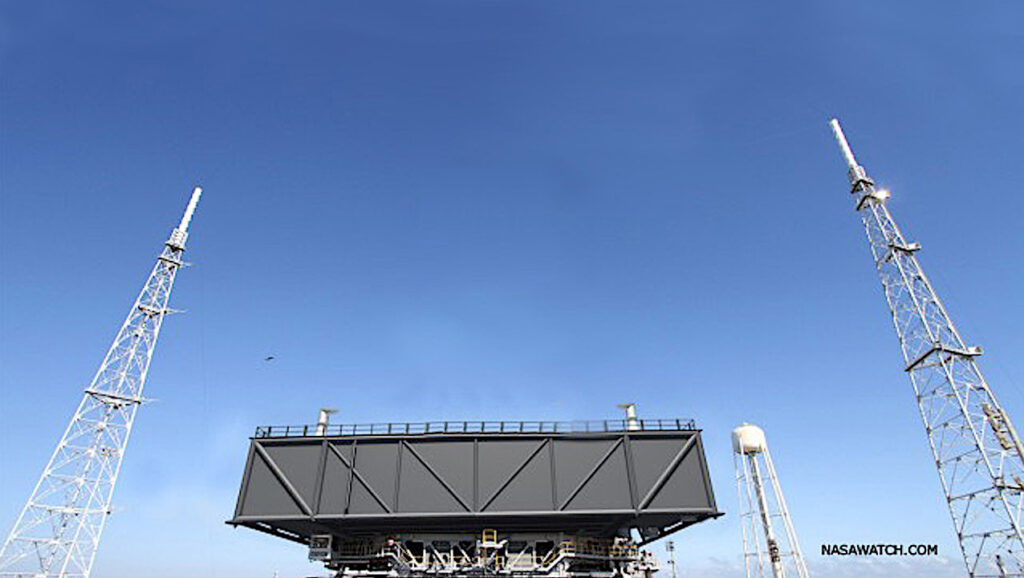
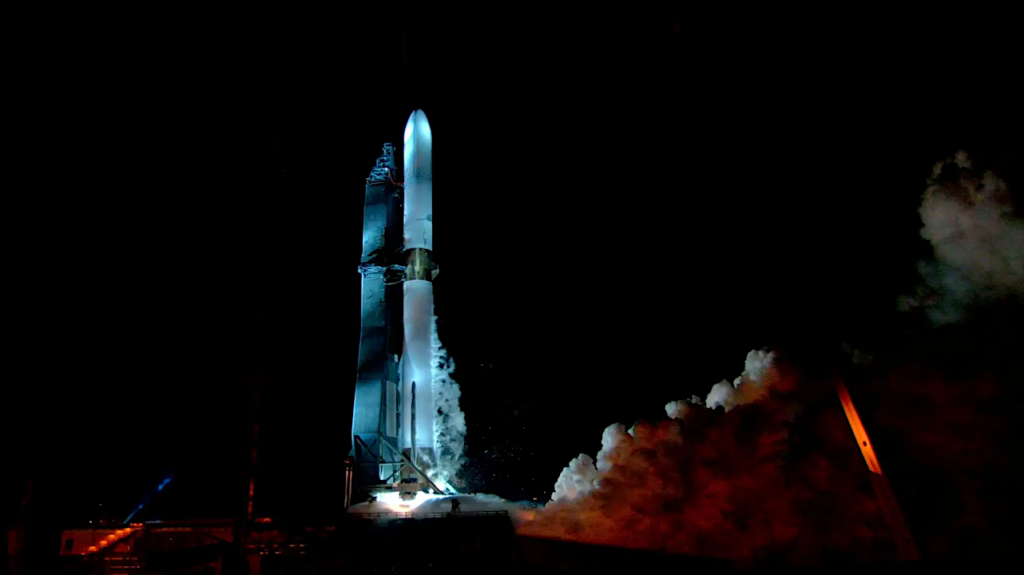

It might be a hand-me-down, but it still is a heavy-lift launcher with potentially 130 metric tons to LEO. That’s good for any missions beyond LEO, assuming they ever decide to fund any of them – I have a disturbing intuition that they’ll find some way to extend ISS or some other space station consuming its funding again, at which point SLS will just become an expensive boondoggle flying missions to LEO that could just as easily be flown by a cheaper launcher.
A vehicle looking for a mission which Congress has consistently failed to fund. Where do you reckon this will end up? My guess, another Cx mission to nowhere.
Cheers
I agree. I think they’re going to extend the ISS mission or something again (or even just slash funding), and SLS’ potential will go to waste. If it goes anywhere at all rather than just being cancelled after a handful of test flights, it will be just to LEO again.
There just doesn’t seem to be much support within NASA for manned missions beyond going up and down to LEO and ISS. Even their support of the rapidly shrinking asteroid retrieval mission feels tepid.
Currently most BEO exploration is more practical to accomplish with robotic systems which do not require heavy lift.
But, there is zero funding for any meaningful beyond LEO missions. The proposed, uninspired, asteroid retrieval mission is proof of this. When New Horizons is sending back stunning pictures of the Pluto system, NASA’s only affordable Orion mission is barely beyond LEO. It’s pathetic, and everyone knows it.
Hoping space station funding will be cancelled to provide funding for Orion missions seems misguided to me. ISS is the perfect place to test hardware for beyond LEO missions. Any beyond LEO mission will surely be based on ISS hardware, to some extent.
I’ve heard that argument before, but I think it’s wrong. We didn’t need a space station to test any of the Apollo equipment – we just launched the module up into orbit for testing in orbit and elsewhere. It’s the same thing with whatever module they build for habitation on a Mars mission, even if they’re doing orbital assembly.
We’re not in disagreement about SLS, not really. The reason why I qualified it with my complaint about a post 2024 ISS is that I think SLS’s capabilities will just be squandered on something we could do with cheaper rockets. If we’re just sending it to LEO again and again, then it’s a waste of money – we should be spending the money on its development on more robotic missions.
So, let’s say that you’re going to test long term life support systems in LEO for a duration of two years… so, you launch a long term HAB module, dock a crew vehicle to it, and have the astronauts do some experiments while they’re up there. Sure sounds like a space station to me. Why not just test the life support systems on ISS?
Because the ISS has had 15 years to develop and test such a system already and meaningful “proving ground” use of the ISS for deep space missions has been long on promise, short on actual launched missions.
Whatever one is utilized going to Mars will likely be based on what is already in use on the ISS.
You build the module for habitation that’s going to carry you to Mars or wherever, then launch it up into LEO. You then fly astronauts up to dock with it, and have them stay inside of it for an extended period. No space station required.
Why would you bother with a needless middle step of testing it all at high expense at ISS before launching the module itself? The systems are going to be pretty different anyways.
Fair enough. So you advocate “all up” testing of essentially the entire Mars transport in LEO. In software terms, this is a Waterfall approach to the project, since you can’t design, build, and test smaller pieces incrementally.
I personally prefer a more incremental approach. Send individual systems to ISS for testing. For example, a CO2 scrubber, and gain experience with that before you put that unit on the Mars transport for testing. In other areas of aerospace engineering, I’ve heard this called “Build a little, test a little, fly a little.”
I see what you mean, but I’m skeptical that the costs of sending the individual systems up to the ISS for testing before you launch the living module will work out in favor of doing so. It’s not like launches to ISS are cheap, either (especially if you have to join up new pieces to it), and you’ll have to do a lot of them unless you’re just repurposing technology you were already using on ISS before work on the mission got underway.
Funny, that’s how the rest of us feel about SLS’s funding.
Like I said, we’re not really in disagreement. I’m supporting SLS tentatively, because there’s at least the possibility that we might get some Trans-LEO piloted missions after the end of the ISS missions in 2024. It’s not a high possibility, but it’s there.
If I thought there’d be a choice between SLS or using the funding to pay for several flag-ship robotic missions between now and the mid-2020s, I’d go for the latter in a heart-beat. But I think the more likely result of SLS being delayed or canceled in a post-ISS period is that NASA just loses the funding level.
I honestly can’t see how being known for wasting money on a boondoggle guarantees future funding, except for a few corrupt politicians in contractor-states. As soon as the power shifts, NASA is left with only its reputation as a wastrel.
Whereas if NASA could build a reputation for efficient manned missions, then its value remains even when the current batch of contractor-whores are replaced by the next batch.
Considering how tepid public support was for the manned program in the 1960s even at the peak of its management and triumph, I’m not convinced it matters either way. The program will survive depending on whether it keeps elite support from Congress and Presidents, regardless of public opinion.
The funding will be there when the ISS is no more. Of course ISS supporters know that, you know, once Orion swings around the moon, suddenly their twenty year old space station will start looking like yesterday’s destination, and find extension to 2028 (or beyond) increasingly unlikely.
But I mean, what do you people think happens to that $3 billion the ISS program eats up when the ISS is at the bottom of the Pacific? Another Space Station? Indefinite ISS extension? That $3 billion is going to annually fund what the SLS carries. It’s also something that really doesn’t need to be worried about until 2022 about… or in other words, about when ISS operations will be wrapping up.
The “no money for payload” argument was a dubious one three years ago and it’s even a worse one today.
Three years, and you still don’t see the insanity of spending $30b, without a mission, to build up a completely arbitrary production capacity. Then another $30b to retain that capacity and workforce for a decade while hoping that another program gets killed so that you can free up yet another $30b for a decade, long enough to research and build actual mission payload hardware. (Assuming that the $30b ISS funding you want to pass to BEO mission-hardware development doesn’t get mostly swallowed up by cost overruns in SLS Block II development in the late 2020’s, early 2030’s. Which, frankly, seems pretty likely, given that SLS contractors have the influence in Congress, not mission hardware contractors.)
It’s not arbitrary. It’s so we have a launcher that can actually send decent-sized piloted spaceships to destinations beyond LEO after the mid-2020s. Without that capability, the manned program is probably going to just tread water or be cancelled out right, and the funding will be lost to NASA (also weakening its budget heft and making the rest of it more vulnerable to budget cut-backs).
. . . Mind you, I think that might happen anyways in the mid-2020s, but SLS at least gives us hope for more. Nothing else does, not even Commercial Crew (which is highly vulnerable to budget cut-backs and has less support).
Except it can’t. The SLS-70 can only loft the Orion into a lunar orbit. And Orion is limited to a lunar orbital mission, due to life-support constraints.
There’s no capability beyond that until the SLS-130 is built, which won’t be until 2031 at the earliest, and likely delayed beyond that…
…Unless someone frees up funding by cancelling another major HSF program…
Which means SLS-130 will be competing against post-2020 mission-hardware development for the funding JonathanN3 wants freed up by cancelling ISS early. And since the launcher’s contractors own the Senators who are protecting SLS, whereas the mission hardware (landers, DSH’s, etc) have no support, it is obvious which side will win.
SLS is not capable of launching BEO missions, because missions do not just depend on payload tonnage, they depend on budget numbers for the mission itself. And SLS will always eat any mission budget that gets near it. (SLS is actually worse than the shuttle.)
This is why the calls for critics to blindly support SLS are so dangerous. It’s based on the illusion that SLS gives you a mission capability “so you might as well hold your nose and support it”. It doesn’t.
The problems with SLS are not the lack of support. SLS doesn’t stop being stupid and unaffordable just because we all close our eyes and pretend.
So we cancel ISS with no hardware for other Orion missions? If so, that means there will be a huge “mission gap” between cancelling ISS and flying any meaningful missions with Orion/SLS. It will take years to develop and build the hardware needed for the first “exploration mission”.
What does SLS/Orion do in the meantime? Swing around the moon on half a dozen missions without landing? That’s certainly not much better than ISS in LEO from a public interest point of view. Astronauts in a can isn’t terribly exciting unless their boots can touch an extraterrestrial body of some sort.
If we abandon the ISS we will not be stuck in LEO. We will be stuck on the ground.
“The SLS vehicle design materialized from an extensive, unbiased set of NASA technical studies…the health and capability of the industrial base …”
English translation: NASA is fully committed to Boeing’s bottom line.
Imagine Shatner in’66 “Explore strange new worlds… Seek out new life … and Preserve the Industrial Base”
Aren’t the overpriced LCS and F-35 programs already doing this? Never mind all the sole sourcing.
I wish I had the capability to analyse the votes/districts/industries directly benefiting from this SLS Franken Pork Rocket. We all cite the usual suspects- but (pardon the Trek pun) an Enterprising person here should create a push pin money map. (Like franchise locations for a Pork BBQ chain).
That’s the real SLS destination. I would imagine it’s always been this way- but somehow- before- we were able to actually accomplish a mission anyhow.
Huh, A BBQ metaphor.
Except we’re the ones with the burnt ends.
The same design as Shuttle. But they have the segment joints sealed and they will never send a blow torch out to cut a support. Bolden said making new Saturn-5s would be the same price. Using all solids would be safer. Maybe a blowtorch would not harm the tanks anyway. Too far away.
No mention of the astronomical cost of launching SLS. 50 years of space exploration and it still costs a fortune to get to orbit. I’d rather see investments in technologies to lower launch costs.
when they draft this .. when they actually, physically write this .. when they go through the editing and final print out … do they honestly believe this?
Folks:
About the only thing different between Ares V and SLS is the Apollo like paint job.
Keith: You should grab an image of the Ares V and place it side by side with SLS to bring that point home.
tinker
Actually what he should do is take a picture of the SLS and slap “Jupiter-130” on it. Because the SLS Block 1 is very, very close to the Direct 3.0 version of it. Sure there are some differences, but it’s far closer to Direct than Ares V.
Folks who spent years – and I do mean years – throwing grenades at Ares I/V in favor of Direct, who finally managed to get what amounts to Direct in the form of the SLS, only to now vilify it, deserve to be reminded on a regular basis that is what they wanted.
Fact is, the argument is over. The anti-government space crowd lost, and that’s not changing. The key difference between the SLS and Constellation is in fact, what makes the “Senate Launch System” moniker so apt – this is a Congressionally driven program, not an Executive branch driven one. Support for it is broad and deep and it’s not tied to Obama (whose administration has tried to kill it for years) and will not be tied to his successors either. It’s not going away. Several times now it’s been budgeted above the request. It’s on schedule. The detractors argument of “never launch” has been an ongoing retreat, first to “launch once”, then to “launch twice”, and now “launch a few times, once a year”, in the face of their predictions looking ever more ridiculous.
Fact is, the source of this bitterness is very clear. It’s difficult getting consensus among so many educated, opinionated people. You have the folks who absolutely lose it over the fact it’s like that all versions of the SLS are likely to have SRBs and not new liquid boosters. You have folks incensed that we’re not making an all new liquid rocket. You have folks who think Falcon Heavy is the only rocket the human race needs for heavy lift. You even have folks who want a fully reusable SSTO “Shuttle 2.0” platform.
Fact is though, the argument is over and this is happening. The never ending argument’s migration about “what’s best to do next” from Ares I/V, to Direct, to pure Commericial space, and extending back into pre-Constellation programs like X-33 have done little but convince me that the the country needs to just pick a program and stick with it, rather than restarting due to some dissent every few years. Dissent’s great. Dissent also got the Space Shuttle retired about a successor because two decades of work on just that lead to a lot of Powerpoint slides and not much more.
I was 11 when I saw the X-33 in the Boston Globe. I’m 32 now. It took that time for Orion to fly, on a Delta IV heavy at that. We’re not restarting, and frankly, at this point I have not one ounce of care for those who are against the SLS. Their opinions are simply not going to become policy.
Bravo…well said.
This.
Now, if there was only some funding to give it destinations for its launches beyond cycling stuff between the surface and LEO.
But Jonny! We still have to rail against the Man!
Direct was always a moving target, trying to make use of whatever had already been developed. The point of the *original* Direct was that the J2-X engines were never needed, the five segment SRBs were never needed, new larger than ET diameter tanks for the core were never needed, and etc.
But, the biggest thing Direct never needed was an upper stage. You could fly it without one SSME and without an upper stage for LEO missions (arguably, it’s not much of an HLV in that configuration, but it would put Orion plus a respectable payload into LEO in one shot).
We’re not going to see SLS fly without an upper stage. Instead, it will fly first with a Delta IV upper stage, which may, or may not, be man rated. That Delta IV upper stage, to me, is a dead end (waste of money). It’s intended to be replaced by an even bigger and more powerful upper stage that’s still being developed.
That said, Direct’s proponents always made the mistake of treating Shuttle components like Lego.
The Shuttle was engineered so close to the limits, right up to the edge of impossible, changing a single component required redesigning the entire system. Even within the Shuttle original side-stack, that made variants like Shuttle-C or liquid boosters (or any other variant) either unaffordable or impossible.
There was no way that you were ever going to save money by repurposing Shuttle components (ET/SRBs/engines) into a “stick” configuration, compared to a clean-sheet design.
Direct might have been cheaper than Ares, and cheaper than SLS, but it was never going to save money over a clean design.
I actually never understood why we need a big honkin’ rocket when you can do the same thing with multiple launches of lower throw rate (yes, I’m thinking FH, but the principle applies more widely).
I get the increased risk. But there are so many advantages to multiple launches, not the least of which is the enabling tech of actually putting things together in space, and the possibility- horrors!- of actually building a real space ship, a craft suitable for orbit-to-orbit flight. And multiple launches are cheaper, too.
But no. We have to build everything here, then throw it across the sea of stars when a sailboat makes a lot more sense. Figuratively speaking, that is.
When/IF SLS launches, though, I will be there to watch it. What a sight!
Because Robert Zubrin made the mistake on writing Mars direct.