
How Long Will ISS Remain Isolated From Terrestrial Politics?

U.S. Govt. Hackers Ready to Hit Back If Russia Tries to Disrupt Election, NBC
“U.S. military hackers have penetrated Russia’s electric grid, telecommunications networks and the Kremlin’s command systems, making them vulnerable to attack by secret American cyber weapons should the U.S. deem it necessary, according to a senior intelligence official and top-secret documents reviewed by NBC News.”
The Curious Geopolitical Immunity of the International Space Station, earlier Post
“Interestingly, every time the bad relationship between the U.S. and Russia gets worse there is no mention of altering U.S./Russian cooperation in space. Indeed, when U.S./China tensions are mentioned, you hear increased talk of cooperation between the U.S. and China in space. Oh wait: the Chinese are going to visit their new space station in a few weeks. Why is space seen as a venture that seemingly transcends terrestrial politics – indeed, one where peaceful collaboration regularly prevails over less desirable behavior? There is a precedent: Antarctica.”
 Keith’s note: How long is the ISS going to be able to remain an orbital, Antarctic-like, politics-free zone? The longer it manages to remain apart from terrestrial turmoils, the more space exploration speaks to a way to transcend such things. But there has to be a breaking point sooner or later.





We have to note the cooperation that the astronauts and cosmonauts have – they do work together well. We all want to see that continue.
However there are many people on the ground in Russia that prepare their training, that prepare their equipment, that support non-Russian flyers in so many ways. And those people are bombarded daily with claims that the non-Russian flyers are a part of a conspiracy against Russia, that we are surrounding Russia and want to harm Russia. Do the Russian support people do a good job and do they wonder why they should do a good job for people who are so hostile to Russia??
The dream of the International Space Station as a political tool to cool diplomacy and unite east and west is a failure. Instead it seems to demonstrate the all too human ability to compartmentalize the “non-overlapping magisteria” of science and politics. Despite the irrationality of it, we have no problem holding schizophrenic beliefs that the US and Russia can have antagonistic positions on Ukraine, Syria, and now nuclear weapon treaties, and yet have totally friendly hand-in-hand cooperation on space and science. It’s not at all obvious to me that this is an unstable situation, unless the superpowers actually end up in real all-out war.
I don’t think it’s a failure yet. We are not shooting at each other yet. We are, now, headed in seperate directions in space, but space is large and the initiative for the next step, Mars, seems to be ours. No one has successfully landed anything useful on the surface of Mars except NASA. So, at the moment anyway, if you like Mars and want to go there, the people of the United States need to not be afraid of you so that NASA is in a political and security position to partner with you. If not, then it may well be a watery grave, permanent solar orbit, or a new crater on Mars for your spacecraft.
Historically Russia has avoided direct war unless attacked. Instead, as in the 18th and 19th Centuries it will take the form of diplomatic interference, intimidation and proxy wars along its border regions. Russia’s first goal will be to recreate its western buffer zone by bringing the Ukraine and Baltic states back into its sphere of control, then it will likely renew its focus on its long drive to establish a connection to a warm water seaport in the Middle East. This has been the geopolitical pattern since the 1400’s and its unlikely to be any different with the new Russian Empire. The ideology of Russians has always been secondary to its geopolitical ambitions.
Except, I don’t know, Ukraine, Georgia, and Afghanistan? To name three recent examples. And Syria depending on how you want to count it. There are many, many more:
https://en.wikipedia.org/wi…
I would guess that most people do not realize that the US and Russian segments of the ISS operate largely independently. There is even lack of much interface or dialog between crew on board, and one of the reasons there is so little crew time available for payload support is because it is usually the US side (including ESA, CSA and JAXA) that is doing most payload work while the Russians are doing their own thing. The Russians never thought of the Station as being primarily for utilization-it was an outpost to be inhabited.
Separate segments and separate operations were not intended at the outset. Originally agreements were worked out that had US and Russians working in a much more interrelated fashion and these were in place and functioning until the first long duration crews on ISS.
Now the two countries have grown further apart.
I hope NASA has secretly maintained the ICM to be available if needed for when the Russians pull out. Based on recent NASA experience, I believe it would take NASA and its contractors at least 5 years develop some other capability to replace the Russian segment and maintain ISS in orbit; as currently situated, ISS would only have about a one year life in orbit without reboost maintenance. There are other problems too. Right now it takes both the Russian and US environmental control systems to make enough oxygen and water to keep the crew of 6 on board. Even with that, the production is constrained which is one reason they no longer overlap crews, and decline to a crew of 3 every time an increment changes. The Russian system has been fairly robust, while the US system has required a lot of maintenance and down time. With the Russian system up and operating, but without the US system, they can keep a crew of 3 on board indefinitely. If they lose the Russian segment, and are dependent on only the US system, the length of time they can maintain any crew on board becomes a problem.
My own experience traveling the world where governments are at one another’s throats is uniformly the same: people everywhere are curious and open. It’s governments that piss at each other. Sure there are hotheads but everyday people are inquisitive and eager to learn.
There’s also the peculiar mob behavior we humans sometimes find so exhilarating.
True. Throughout history a key source of conflict has been governments, especially royal families, seeking additional power and territory. Recognition of this was a major factor which motivated the prohibition of the establishment of sovereignty and associated real property rights in the Antarctic and space. The geopolitical mess emerging in the South China sea and Arctic oceans shows the wisdom to continue the prohibition of real property rights and associated sovereignty in space.
Over the last couple of years the cold war has been renewed, thanks in large measure to failed Obama Administration policies and Putin’s machismo, and the situation threatens to get much further out of hand, particularly in the Middle East, at virtually anytime. If Clinton wins the election, expect an escalation of problems in the near future as Obama will try to drive new Middle East agreements before the end of his Administration, and expecting his initiaitives to stand once Clinton takes office; if Trump wins the election, there might be a respite for a time.
The Russians can, and I am convinced, will, pull out of ISS when it serves them politically, and they will do so with little to no notice. They will do it for maximum political effect. And make no mistake, they can do it, and they could do it today if the mood served them.
The Russian side of the Station can operate completely independently of the US side. The Russians also have crew and logistics capability. The US side cannot operate independently-there is no propulsion system. Until Space X or Boeing begins to fly crew, there is also no crew return or launch capability.
At present, its survival beyond 2024 is tenuous as it is; 2028 a fantasy. If the US and Russia get farther apart, or Russia cant further afford its side, the ISS is over because the US has no propulsion system – and a lot of negative things can happen in 7 years, just look back. High ideals wont save it and barely save us here on the ground. Add to this that a lot of the systems and hardware are aging, not designed for the long duration. This is not pessimism but ultra-realism and probability and unless something drastic changes I fear the worst.
“But there has to be a breaking point sooner or later.”
Suppose the breaking point doesn’t happen in space relations, suppose it happens here, in terrestrial politics? There’s precedent for new ideas and tolerances informing and maturing the structures that created the endeavor.
I like to think the space cooperation imperative has been keeping things a little friendlier on the ground. Words and insults but no bullets.
I seem to recall a series of public video chats between Mir and the Spaceshuttle hosted on TV by Peter Jennings, but maybe I’ve got that mixed up with something else. The way the Russian accent renders the name “Peter” has stuck with me for all this time. I don’t remember what those forums were called. Then that first Shuttle visit to Mir. That all culminated in the ISS and watching all of it has been wonderful and stress-relieving for this Cold-war child. 🙂
Nothing brings people together like shared common interests. Russia and the U.S. both use their military industrial complex to build spaceflight hardware and keeping that monster fed without killing people is good for everyone. It promotes continued peaceful cooperation, pays bureaucrats to get along, advances science and technology for both sides, and inspires the youth of both sides to get an education. Everyone stays fat and happy and nobody gets hurt…
…until we stop buying seats, start building our own private modules and ROSCOSMOS runs off with their piece of the ISS.
Hopefully, other common interests further away will keep up the tradition.
Since space policy has always been driven by geopolitics and the real question is when will the ISS reflect the changed geopolitical landscape. Recall that it’s precursor, Space Station Freedom, was the Reagan Administration’s response to the Russian’ Salyut and Mir. When the Soviet Union collapsed the ISS was created both as a symbolic end to the Cold War and to keep the Russian space industry intact so Russian engineers wouldn’t leave to help governments like Iran and North Korea acquire space technology. Now that Russian has recovered from the collapse and Mr. Putin has renewed Russia’s 500 year long quest to dominate the Eurasian land mass it is only a matter of time before the changing geopolitical landscape catches up with ISS.
My opinion is the only thing keeping it isolated so far is the dependence of the U.S. on the Russian Soyuz after the duel policy mistake of replacing OSP with VSE and the premature retirement of the Space Shuttle under the Bush Administration. The money flowing to Russia’s space program discourages them from rocking the boat while American dependence on the Soyuz requires the U.S. to also not rock the boat. Once CCP is finally servicing it and the money ceases flowing to Russia things will likely change with the ISS.
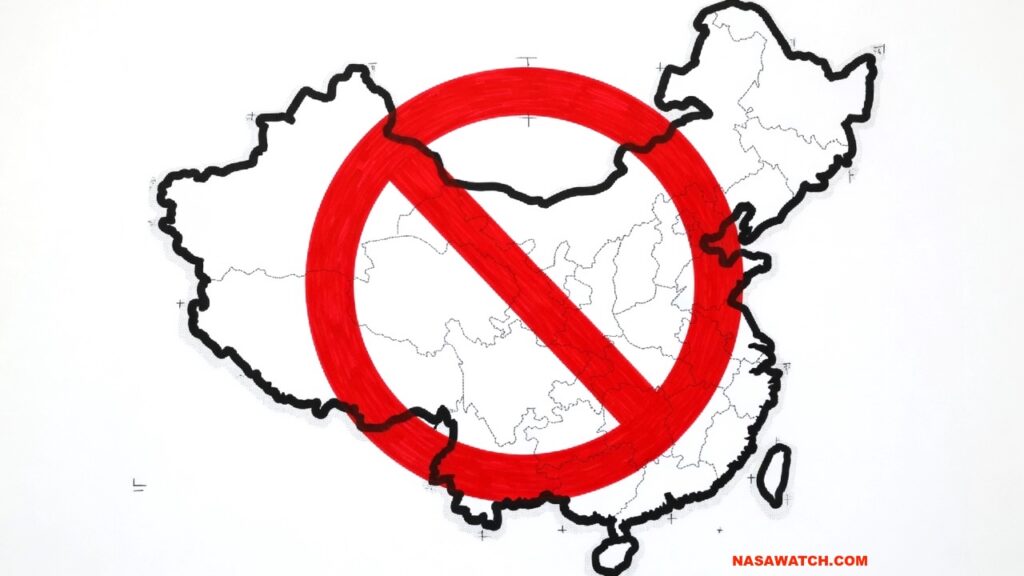
ISS isn’t isolated from terrestrial politics; look at the exclusion of China and India.
I am almost certain that India is not banned from ISS. And China is banned from *all* space interaction with the U.S. But You miss my point entirely. U.S. and Russia are entering a new Cold War on Earth with cooperation vanishing only to be replaced by aggression. Yet ISS just continues to be operated as it always has been.
I get your point, Keith, but – what? How is the operation of ISS as ‘usual’ bad thing?
The ISS is a very small piece of cooperation, artificially large amongst resident space nuts only, I should point out.
Daniel,
“I feel continuing collaboration on the ISS in no way weakens the US”
Michael,
“How is the operation of ISS as ‘usual’ bad thing?”
I’m pretty sure that’s the opposite of what Keith meant.
He’s asking “how long can an oasis last against the encroaching desert?” He’s not praising the desert, nor criticising the oasis.
A different and perhaps better reading.
Let’s hope not. And I don’t think I’d say that myself to mitigate the self-fulfilling prophesy effect.
The cold war actually benefited scientific research in Antarctica. Both from official cooperation and from unofficial “we can’t let them be the first to do X” lobbying for funding. (And, in at least one case, American and Russian scientists actually colluded to promote that one-upmanship and get both government to fund a research program in parallel.) I don’t see why the same thing couldn’t happen on orbit.
Like Michael I feel continuing collaboration on the ISS in no way weakens the US and in some ways helps to reduce tension and conflict. Today the principal drivers of superpower conflict are symbolic and political. The ISS obviously cannot end international conflict, but as a symbol of collaboration it can have a real and positive effect. This stabilizing influence could be increased by enlarging the ISS program to include China and India.
Actually, the perception in Russia is that the US has been systematically undermining Russian influence in eastern Europe and now through the Syrian conflict. The Ukrainian uprising, that led to the Crimean invasion and the pseudo-invasion of eastern Ukraine, was seen as entirely due to US/EU meddling. Even the drop in oil and gas prices (and it’s effect on the Russian economy) was seen as part of US/Saudi machinations.
The perception is that the US, under Obama, has been cleverly waging a soft-war against Russia, hence the aggression in Russia’s response. They feel that it’s justified. (Plus it serves as a domestic distraction for Putin’s economic incompetence, obviously.)
The US right, otoh, is seen as a “useful idiot”. Short-sighted, ignorant, easily manipulated. Russian oligarchs have been carefully courting their US equivalents. Which is why you see such Putin-worship on the right, and pro-Russia lines in right-wing media like Breitbart, such as support for the Syrian government and against Ukraine.
In Europe, they have to resort to funding neo-Nazi/white-supremicist groups; in the US, they can play directly for a major political party.