
NASA's Rescue Expertise Is Needed Again – In Thailand

 Keith’s note: I got this note from Homer Hickam today: “While reading about the kids in Thailand trapped in a cave by floodwaters and the rescuers thinking about training them to scuba dive, it first occurred to me that we teach youngsters to dive very quickly at Space Camp’s Underwater Astronaut Trainer (UAT) and might be able to help. But on second thought, we do this in ideal conditions with perfectly clear, warm water. These youngsters in Thailand would have to deal with cold, very murky, and rapidly moving water so I concluded teaching them to dive was impractical.
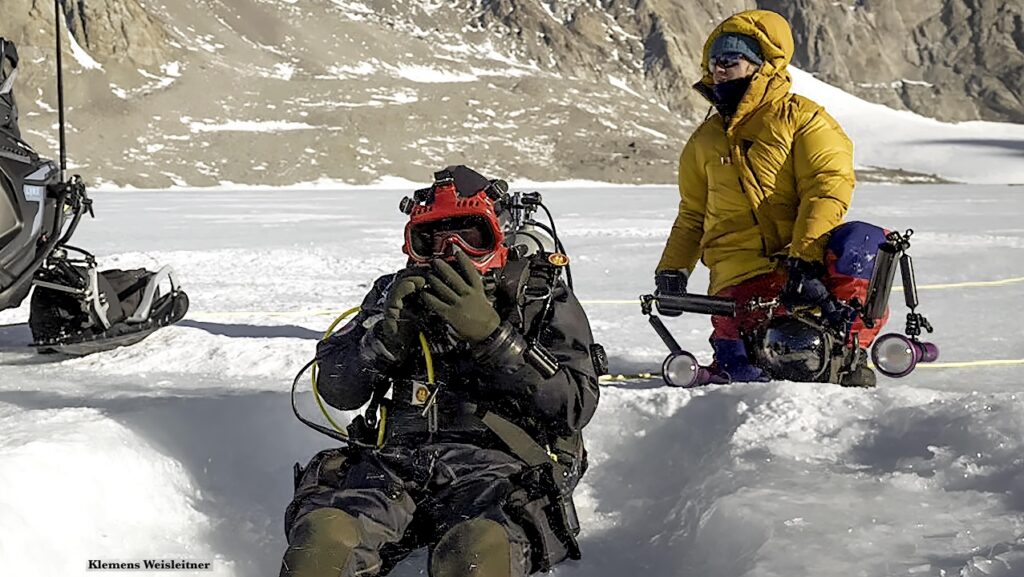
Then I recalled that NASA developed Personal Rescue Enclosures (PRE) for shuttle rescues. Here’s a mockup of the rescue ball as tested. In this case, the ball would be flooded, eliminating the buoyancy problem. Could be done and the kids could be fully controlled this way.
Although this was decades ago and the PRE may have been discarded long ago, the ability of NASA to rebuild one could come quickly. The problem with a PRE underwater is, of course, its buoyancy but lead could be built within the layers to compensate and the weight of the child and a small scuba tank included. It would be great if someone knowledgable of the PRE at NASA (probably at JSC) could dust one of these things off and see if our agency could help this rather desperate situation, if not with the PRE, then other rescue devices we may have on hand or quickly fabricated.”
I have been watching this story unfold too. From news coverage there seem to be 3 options: wait 3-4 months in the cave until the monsoon rains subside and water levels drop; teach the children to dive and bring them out with SCUBA gear; or drill a tunnel down to rescue them. So far the diving option seems to be the one that is getting the most attention. With regard to the PRE suggestion I can recall a friend of mine who went through astronaut screening and at one point they put him inside on of these PREs to see how he’d react. He took selfies and then fell asleep. He passed. I wonder if these devices still exist. They were designed to be self-contained pressure vessels and the design seems to be straight forward. Perhaps NASA could use the schools who make logistics bags for the ISS in the HUTCH program to replicate them.
As readers may recall in 2010 NASA played a pivotal role in the rescue of 33 Chilean miners trapped underground: “NASA engaged the NASA Engineering and Safety Center (NESC), a task force of engineering experts from its 10 agency centers and partner organizations that can be ready at a moment’s notice.” It would seem that NASA left quite an impression on the people of Chile given that children in small towns in Chile can be seen wearing NASA t-shirts to this day.
NASA has also sponsored the development of sensitive listening devices such as FINDER which have been used to rescue earthquake victims in Mexico and Nepal.
And of course, NASA rescued Matt Damon from Mars. So … perhaps NASA has something to offer these boys trapped deep in a mine in Thailand …




The PRE idea might work but they say the path out underwater is complex with narrow tunnels and turns so I’d be afraid they’d get caught at a bend, I hope they can drill a hole down – then they could use the same kind of capsule as was used in Chile to get the miners out.
Which, by the way, my dad invented in 1948. https://uploads.disquscdn.c…
That’s great – somehow NASA seemed tonged credit for it during the Chilean rescue.
This suit might also be an option. You would only need one or two. https://en.wikipedia.org/wi…
Unfortunately, this idea is almost certainly a non-starter, for a variety of reasons. For one, the reports are some of the passages are tight and narrow. As a caver I can assure you that means almost certainly a ball this size won’t fit.
Secondly, while the materials here are fairly durable, it’s amazing how quickly contact with cave walls can destroy materials. That’s a risk you absolutely don’t want here. One leak and you’ve got a dead boy.
The support NASA can give is more likely in psychological knowledge about prolonged isolation, best diet options and the like.
There are a lot of unknowns here. If these caves were tourist paths, I’m not sure where the constrictions are or how large they are. As a former cave diver myself, I am fully aware of the problems but also know that you nor I know what this cave looks like. In the meantime, let’s explore some options.
The passages are large enough that adult divers with scuba tanks were able to penetrate all the way through the tunnel to the boys, and the boys are smaller.
Sounds like they are going to have the boys use scuba tanks:
“Thai authorities are racing to finalise rescue plans to retrieve 12 boys and their football coach from a Thailand cave before storms forecast for the end of the week, after which an extraction will become “almost impossible” for months, according to one coordinator of the international rescue effort. The boys, none of who can swim, are being trained in how to breathe through diving masks but none have made any attempt to get through the water hemming them in.” (From Maihael Safi of the Guardian.)
So were these: https://uploads.disquscdn.c…
I was just demonstrating that space suits designed for a vacuum also work underwater. I know all the pitfalls here but having worked as a scuba instructor/wreck diver/cave diver and with astronauts (that scuba diver is me), there are options which can be explored. The main thing I was trying to suggest is rather than trying to teach children to scuba dive, the solution might be to place them within a contained bag, clip them to a safety line, and pull them out in that manner. Both NASA and the Navy have expertise in that. Most folks have the wrong idea of pressures in space, by the way. Suits are pressurized to only 5 psi. Underwater, they are inflated to ambient plus 5 which is around 35 psi at 33 feet. A lot depends on how deep the water is here.
I agree with this solution it will like to be in a womb again. But will see.
Yep. A passive sack with a small air supply, a clip, a safety line, and a very brave diver guiding it.
Also, the buoyancy of an inflated ball would be immense, I suspect making it impossible to maneuver when it has floated to the top of, and jammed against itself against, a cave wall. I wonder how long they need to be under? I would think a two cave divers per kid, with the kid breathing off a spare regulator. Then they are just cargo to drag, as long as they can keep their mouth shut. (Yes, I dive, for the record).
About 900 pounds of buoyancy without a cargo. This is why a partially wet ball might be a better solution. There are ways around this. We dealt with it for years in the Neutral Buoyancy Simulator.
I wonder how big are the pumps they are using? The US Navy has some really big pumps for saving damaged carriers that might be up to the job.
The British also have the SEIE MK-10 suit for submarine rescue that would probably work in this situation. It is designed specifically to transport injured personnel from submarines to the surface.
A combination of the two might be effective, reducing the water level to minimize transport and then using the sub rescue suits.
Yes I wondered as well if truly gargantuan pumps couldn’t appreciably lower the water; I’ve not been able to get much detailed information on the caves though. Apparently the place where the kids landed has some sort of opening to the atmosphere.
Here’s a wacky idea: my wife had thoracic surgery last week, during which they pumped CO2 into her thorax so the surgeons could see what’s what. If the cave situation where just ‘so’ perhaps a high atmospheric overpressure would drive the water level down (in combination with other techniques)?
Godspeed toward your wife’s recovery, Michael.
I’ve been inflated that way a few times myself for laproscopic organ removals as well as an incisional hernia patch installation. Not a ton of fun.
Thank you, Bob.
My good friend and family doc explains part of the post surgery discomfort. Susy had quite a bit of pain in her shoulder area; and anyone with a beer smattering knowledge of human physiology knows that this area is not contiguous with the lower abdomen.
So, why the shoulder pain? It turns out that the gas irritates the diaphragm. And included in the diaphragm is a nest of nerves, some of which are related to the shoulder area in someway -This being the limit of my knowledge of human physiology!
But as Greg explained the pain in the shoulder is referred from the nerves in the diaphragm. There are denizens here about much more knowledgeable about this, so I hope I have not completely screwed up this explanation.
And again thank you. Modern medicine is an amazing thing to behold. Suzie wil l be fine. We are blessed with finee and talented physicians and teams all across our great country.
Instead of commenting on the details, I’ll just toss out an example of how scientific research can help someone trapped in a cave (or mine.) One of the funny photos of my father was a result of applying his scientific work to a rescue operation. As a graduate student at Lehigh, advised by Maurice Ewing, he helped develop seismic techniques to probe subsurface structures. That’s a nice scientific technique, and also useful for oil prospecting.
But, on one occasion, my father and Doc Ewing were at a back-tie, fund raising event for their university. In the middle of the event, they got an emergency call. A coal mine had collapsed. Since they were close to the site and knew about mapping the subsurface, they were asked to go out and try to figure out exactly where the mine shaft had collapsed. That would help the rescue effort. So the result was scientific methods, which were not designed for rescue operation, actually saving people’s lives.
And, just to make it fun, it also resulted in a photograph on my father and Doc Ewing, digging holes in the ground and placing sensor, while wearing tuxedoes. They did get called out from a fund-raising event and thought the emergency was too urgent to change clothes.
That’s an amazing story, how fortunate those miners were that your father had done that research and was nearby.
Similarly in this case mapping the cave is a challenge. Even in the rainy season draining the water may be possible, it depends on the inflow rate. A recent news report noted the death of one of the Thai military divers; the cause is unclear.
I’ve not seen a really informative map or other representation of the area. The NYTimes has some detail, but still not very much.
Of course a situation like this must be approached from several directions. And being encumbered by incomplete data adds to difficulty.
However, one place to start:
Some principles of surface drainage that help get a handle on the situation and can point to possible solutions. Surface drainage is a very well-understood engineering problem.
Whenever we deal with drainage we look first at the ‘watershed’: a line, usually a contour line, when viewed in plan view, that describes the area contributing rain into the caves. This is akin to the Continental Divide, tracing the flow of a single drop of water. In the case of caves it’s doubly difficult as watersheds might not be contiguous.
In any case that’s where you start when trying to characterize the amount of water moving into the caves.
Next of course one tries to intercept watershed water as it moves from the contributory area(s) into the caves. This can be very easy or very difficult depending on the terrain.
Pumping might also be helful. I saw a report however that one attempt was thwarted because pump outflow was going right back into the watershed; this indicates how difficult it can be to define the watershed limit.
Intercepting additional date appears to be crucial. I’d look for places where the new rainfall is concentrated by terrain.
*****
I did see a graphic accompanying a discussion of possible drilling which showed at least one spot where the hole would be about 2500′. Not a big number but getting the equipment to the spot appeared prohibitive.
*****
But this reminded me of the time I tried to enter the Great Pyramid. The shaft was not made for 6’2″ Americans. But apropos this story, I was very light headed due to the number of people in the place and the reduced [O2]. Could not imagine, even as a child, inserting myself into one of those Homer Balls!
Although they are considering just waiting it out since everyone seems to be otherwise healthy and safe, there is always the possibility that one of the boys will become ill or injured and have to be evacuated. So either way it’s worth coming up with a method to get someone out while it is still flooded.
How quickly would one (at least) of the kids panic ? I assume adults (with breathing gear) can get to them, so access isn’t That big of a Problem. However it is quite predictable that something will happen and a kid will get into difficulties and that will rapidly spiral. I think trying to get the kids out underwater won’t end well (for at least some of the kids).
How much water is flowing through the cave ? How much spare space is there ? Could you inflate a dam upstream of the kids ?? Maybe have a small flexible duct the carry water downstream ??
Are you picturing perhaps one of Homer’s inflated devices, but without a person inside/ would inflate, conforming to the irregular walls? (or a similar device one supposes).
There has also been some discussion about attempting to drill a vertical hole to enable hoisting the boys out, Not sure how well that would work given the potential for cave-ins, the time it would take, getting the right location for drilling, etc. At least the boys are reachable and are being cared for as best they can.