
Boeing Confirms Another Starliner Delay

Boeing delays Starliner again, casting doubt on commercial flights in 2018, Ars Technica
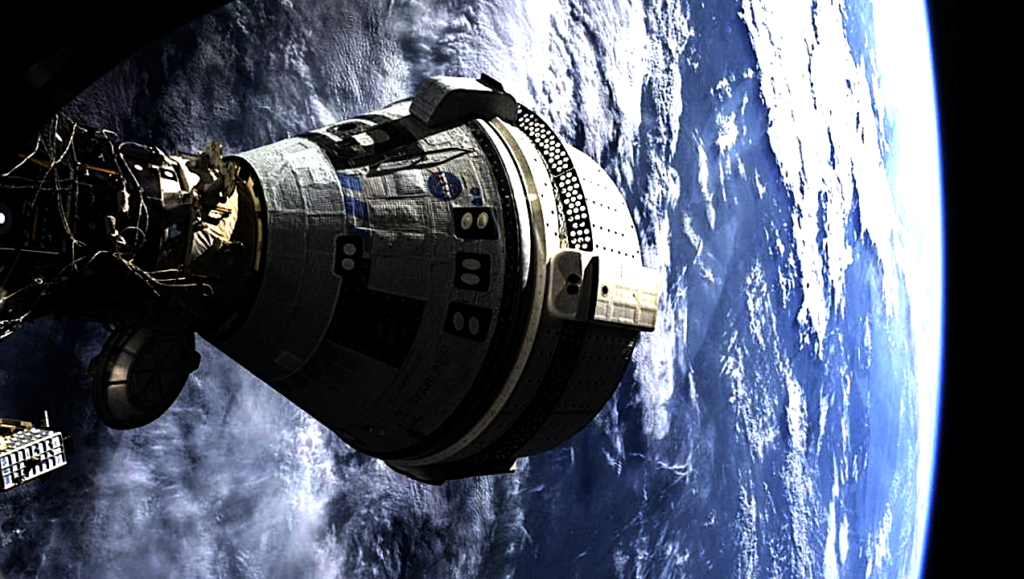
“After an initial delay from late 2017 into early 2018, Boeing has acknowledged a second slippage of its schedule for the first commercial crew flights of its Starliner spacecraft. According to a report in Aviation Week, the company now says it will not be ready to begin operational flights until December 2018, a full year after NASA had originally hoped its commercial crew providers would be ready. The admission by Boeing confirms a report by NASA’s Inspector General, which found significant delays with both the Boeing and SpaceX efforts to develop private spacecraft to ferry US astronauts to and from the International Space Station. The delay also explains why, as Ars has previously reported, senior managers with the International Space Station program are likely to press ahead with the politically painful decision to purchase Soyuz seats for the calendar year 2019.”
– Industry Groups Avoid Mention of OIG Reports on Cost/Schedule, earlier post
– NASA OIG Report Predicts Commercial Crew Delay To Late 2018, earlier post






Possibly $1.5 billion is insufficient for something so darn hard. Let’s ask SpaceX.
“The admission by Boeing confirms a report by NASA’s Inspector General, which found significant delays with both the Boeing and SpaceX efforts to develop private spacecraft to ferry US astronauts to and from the International Space Station.”
From what I’ve read, the delays with SpaceX’s Dragon have been significantly expanded by NASA’s insistence that it land in water, rather than on land. They’ve had to go back and change the craft to seal out salt water.
I’d love to see some thoughtful discussion on the reasonableness of this demand.
It is pretty reasonable. NASA is open to propulsive landing missions, after those are first properly developed, demonstrated and mature. SpaceX has an alternative plan to land on the sea on parachutes if something goes wrong with the superdracos when tested at altitude, but for this to work properly they need a capsule that can safely land in the water, and not sink before anyone reaches it with humans on board.
Cargo Dragon which was designed to land on water has had some problems with that, and apparently its conversion to Crew Dragon might have carried some of those problems there too. This is something that has to be addressed, especially since the propulsive landing missions will come live some time after the Crew Dragon has been flying regularly to the ISS.
If you really want to talk about unreasonable demands, a far better example would be the MMOD protection rules NASA has given to both companies (those were properly set and communicated after the contracts allocation btw). NASA wants a 270:1 LOC strategy, matching Dragon and CST-100 to Orion in this department…without the billions spent on Orion development to make this happen.
Another boost to Rogozin’s trampoline business.
What the hell is wrong with this country when we can’t even build a dinky space capsule anymore…..? musk wants to build a 21st century interplanetary ship….Boeing and NASA can’t even fly a 4 man capsule
Totally baffled
In case you haven’t noticed, SpaceX hasn’t been able to build a dinky crewed space capsule either.
They are making good progress, I believe. You may have missed the launch abort test the conducted some time back. Also, NASA insisted that they retrofit Crew Dragon to land in salt water, rather than on land. This is taking extra time.
I suggest that the level of acceptable risk being required of the commercial providers (and possibly the Orion vehicle) is such that it may be approaching unattainable limits. Death by design. Of course I have absolutely no evidence to support this and it’s simply speculation on my part.
Cheers
I don’t believe SpaceX has announced a delay from 2017 for it’s crewed launch but it’s not likely to take place until 2018 at the earliest and Boeing may still beat it out.
Interesting that Blue Origin completed the inflight abort test but Boeing and SpaceX still need to do that.
First off, Blue Origin’s capsule isn’t an orbital vehicle, so it’s a different class of spacecraft. Second, Boeing is not doing an in-flight abort test.