This is not a NASA Website. You might learn something. It's YOUR space agency. Get involved. Take it back. Make it work - for YOU.
TAG
“astronomy”
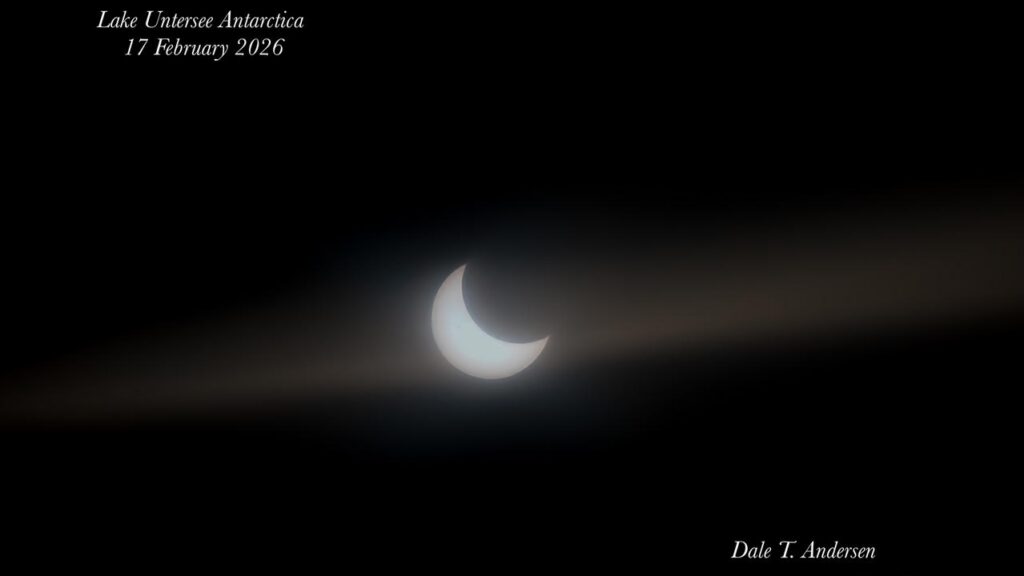
Eclipse Watching And Base Camp Packing At Lake Untersee

“A partial eclipse over Lake Untersee yesterday — an ordinary piece of celestial clockwork that felt anything but ordinary from the icy shores of Lake Untersee in the mountains of Antarctica. Eclipses come around often enough; being in the right place, at the right moment, to watch the Sun take a quiet bite out of itself is the rarer gift!” More

(more…)
  • NASA Watch
  • February 18, 2026
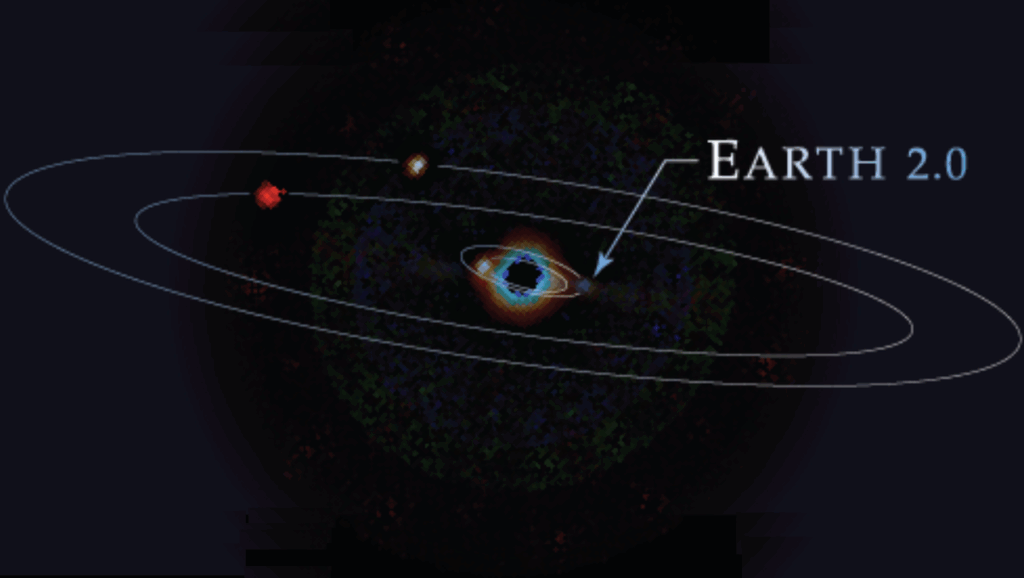
Looking For Earth 2.0

Keith’s note: NASA issued a release today about Habitable Worlds Observatory tech development contracts. Once again, I am baffled why news involving the search for habitable worlds – a core astrobiology thing – doesn’t use the word “astrobiology” in the release or web pages about Habitable Worlds Observatory listed in the release. So I added them to what I am posting. It is cool to get Jared Isaacman quoted – in his own words. The more engaged the Administrator is in these things the better he can support them – and explain them to Congress and the White House. Searching for life elsewhere in the universe is one of the most profound things NASA does – shoulder to shoulder with searching for the origin of the universe itself and making humans a space faring species. NASA needs to develop a better style guide and outreach plan (actually it has never had an outreach plan) so as to better explain this cross-disciplinary activities to the public as well as policy makers. If NASA wants to retain/expand its leadership in space it needs to start telling a more compelling, cohesive, and strategically-enabled story. And oh yes – a story that touches and involves everyone, everywhere. Just sayin’.

(more…)
  • NASA Watch
  • January 5, 2026
Looking For Pandora?

Keith’s note: While current NASA space science is fighting for its existence, some people are not deterred and dream big. Have a look at: Seeking The Worlds Of Avatar: Prospects for Detecting Moons Orbiting a Giant Planet in Alpha Centauri A’s Habitable Zone (I modified the title): “We focus our simulations on α Centauri A, orbited by a hypothetical giant planet consistent with candidate detections in Very Large Telescope and James Webb Space Telescope observations. We find that such a facility would be capable of detecting ∼Earth-mass moons in a five year campaign, assuming a Saturn-mass planet. More generally, we simulate expected detection limits for a variety of levels of astrometric precision.” According to the official “Avatar” series website: In orbit around α Centauri A is Pandora one of fourteen moons that orbit the gas giant Polyphemus.” We’ll all be going back to Pandora in December in “Avatar: Fire and Ash” (trailer). While Space Science may be suffering – we can never allow the b*stards to take our dreams away.

(more…)
  • NASA Watch
  • September 22, 2025
An Interstellar Comet Is Moving Through Our Star System

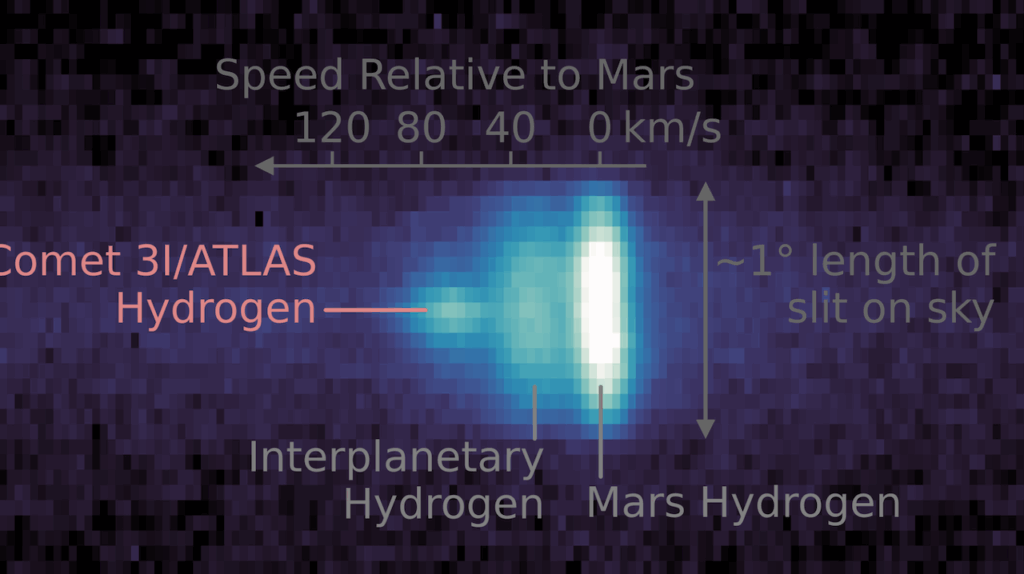
Keith’s note: according to NASA: “On July 1, the NASA-funded ATLAS (Asteroid Terrestrial-impact Last Alert System) survey telescope in Rio Hurtado, Chile, first reported observations of a comet that originated from interstellar space. Arriving from the direction of the constellation Sagittarius, the interstellar comet has been officially named 3I/ATLAS. It is currently located about 420 million miles (670 million kilometers) away.” More – plus video

(more…)
  • NASA Watch
  • July 2, 2025
NASA Ignores The Amazing Rubin Observatory

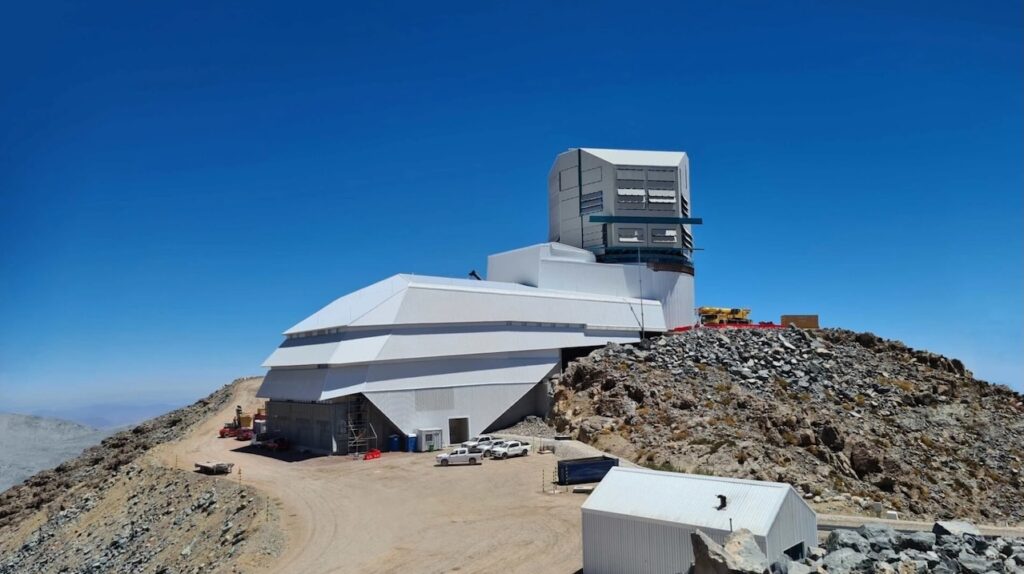
Keith’s note: according to this NSF press release “From distant stars and galaxies to asteroids whizzing through the solar system, this next-generation facility unveils its first imagery and brings the night sky to life like never before.” This amazing instrument will be used by NASA astronomers as well as people around the world. Yet another example of American leadership in space science and technology. But does NASA.gov mention it? No. @NASA? No. OSTP director Kratsios was at the event today and made comments about the importance of science and technology while OSTP simultaneously endorses cuts across the Federal government. He also referred to this as an “all of government” instrument. Yet NASA seems to be ignoring it. WTF NASA OCOMM?

(more…)
  • NASA Watch
  • June 23, 2025
Happy Birthday Hubble Space Telescope! Time To Slash Your Budget.

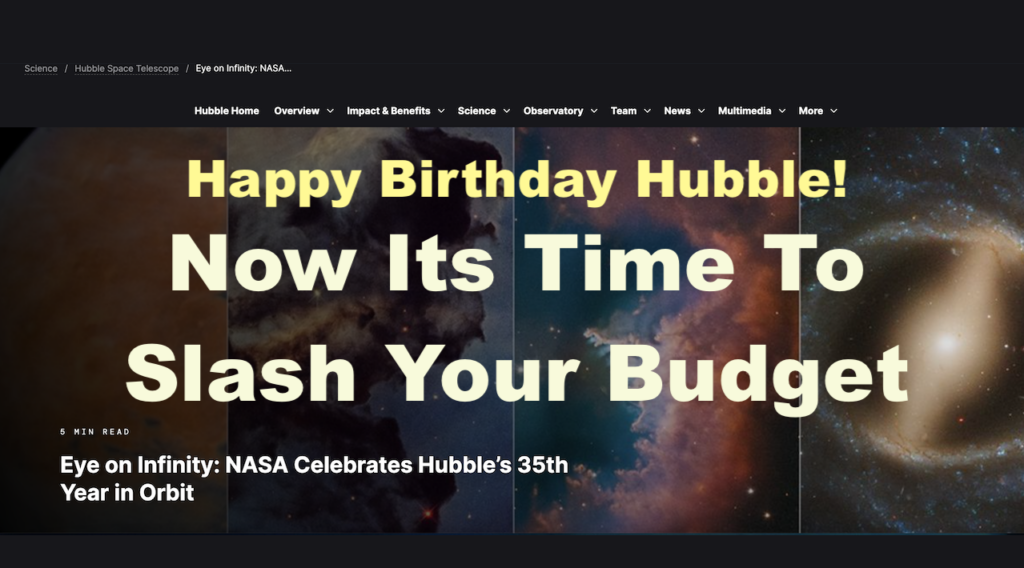
Keith’s note: NASA and ESA are celebrating Hubble’s 35th birthday today. But the next 5 birthdays will be sad. According to space science community sources the pending budget from OMB orders NASA to start shutting Hubble off ASAP with a 20% budget cut in the next year’s budget with a zeroed budget after 5 years (2030). Grant money will evaporate. ACS, WFC3 IR channel, STIS CCD, will be turned off. Instrument scientists, software developers and flight controllers will be laid off. Oh well. Its been fun Hubble. Oh yes: NASA Roman is toast too. Lots of people would like to weigh in on this and other science cuts but they cannot. For now.

(more…)
  • NASA Watch
  • April 24, 2025
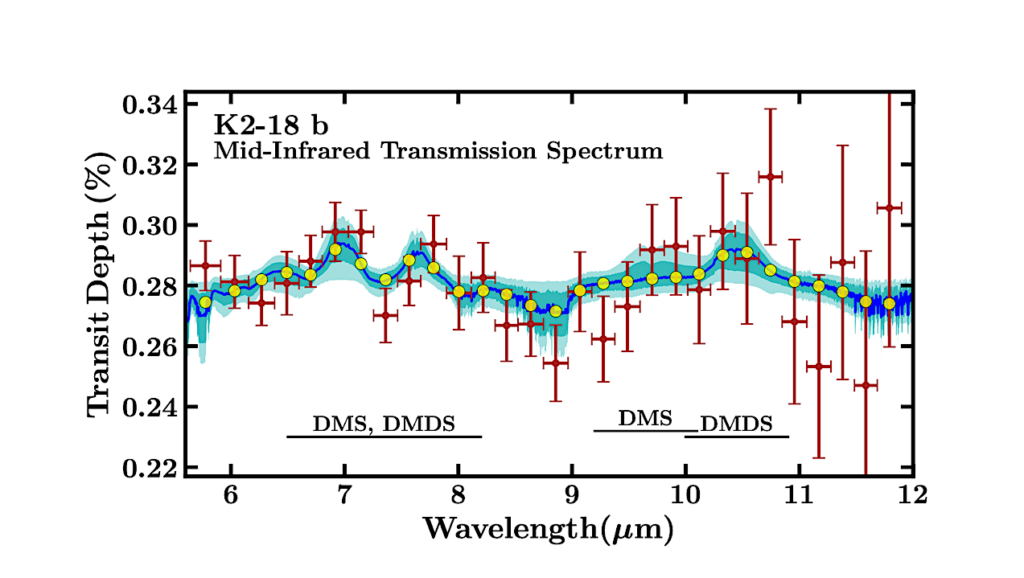
Possible Biosignature Detection On Exoplanet K2-18 b?

Keith’s note: Some interesting news from Cambridge University. Astronomers using the James Webb Space Telescope have detected “a tentative hint of dimethyl sulfide (DMS)“. A biosignature, simply defined, is a substance that is usually produced by life. It can often also have non-life sources. But usually when it is detected in certain circumstances it is a blinking light for something interesting. Follow-up research will be required – by multiple teams. As Carl Sagan is often quoted as saying “Extraordinary claims require extraordinary evidence”. NASA helped fund this research – research that is at the core of Astrobiology. Let’s see if they talk about it. Or not. To be clear: no one has discovered extraterrestrial life. At best they have noticed the hint – of a hint – of something that is worth looking into.

  • According to New Constraints On DMS and DMDS In The Atmosphere Of K2-18 b From JWST MIRI: “Recent JWST transmission spectroscopy of the candidate hycean world K2-18 b in the near-infrared led to the first detections of carbon-bearing molecules CH4 and CO2 in its atmosphere, with a composition consistent with predictions for hycean conditions. The observations also provided a tentative hint of dimethyl sulfide (DMS), a possible biosignature gas, but the inference was of low statistical significance. … The results also highlight the need for additional experimental and theoretical work to determine accurate cross sections of important biosignature gases and identify potential abiotic sources. We discuss the implications of the present findings for the possibility of biological activity on K2-18 b.
  • According to “Strongest Hints Yet Of Biological Activity Outside The Solar System” from Cambridge University: “Using data from the James Webb Space Telescope (JWST), the astronomers, led by the University of Cambridge, have detected the chemical fingerprints of dimethyl sulfide (DMS) and/or dimethyl disulfide (DMDS), in the atmosphere of the exoplanet K2-18b, which orbits its star in the habitable zone. On Earth, DMS and DMDS are only produced by life, primarily microbial life such as marine phytoplankton. While an unknown chemical process may be the source of these molecules in K2-18b’s atmosphere, the results are the strongest evidence yet that life may exist on a planet outside our solar system.”
(more…)
  • NASA Watch
  • April 17, 2025
Talking About Euclid’s Stellar Cartography On BBC World Service

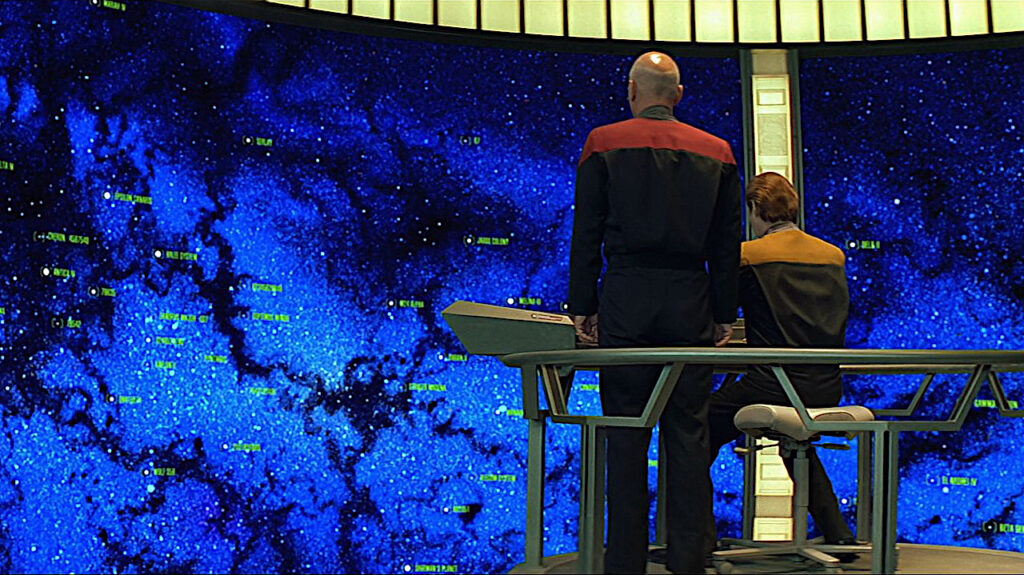
Keith’s note: I just did an interview on BBC World Service’s program “Outside Source” a few minutes ago about the stunning new imagery from Euclid. I used the stellar cartography scene from “Star Trek Generations” as my illustrative image (on radio). They’ll be playing this during the day and posting it online to a weekly audience of 364+ million. I emphasized how this is the sort of mission that has applicability to everyone everywhere – scientist or non-scientist alike. Meanwhile here is my [Audio] of the interview. I’ll post the BBC’s link later.

(more…)
  • NASA Watch
  • November 7, 2023