Keith’s note: Acting NASA Administrator Janet Petro just gave a plenary overview of NASA science at NAS Space Science Week [audio] This was a clear snapshot of what NASA science is, how the agency leads the world in this endeavor, its importance as an economic multiplier, and its value as an enabling tool for all forms of exploration. Of course, no details were offered on budgets, personnel, etc. Petro said “While I cannot speculate on decisions that have not been made yet, I can tell you this: NASA’s commitment to scientific excellence has never waivered and it will not waiver now.” “NASA is and will continue to be the global leader in space exploration and scientific discovery”. Of course, this is all moot if the White House/OSTP/OMB/OPM/DOGE says “Yea, yea, yea. So what. You’re still cut.”
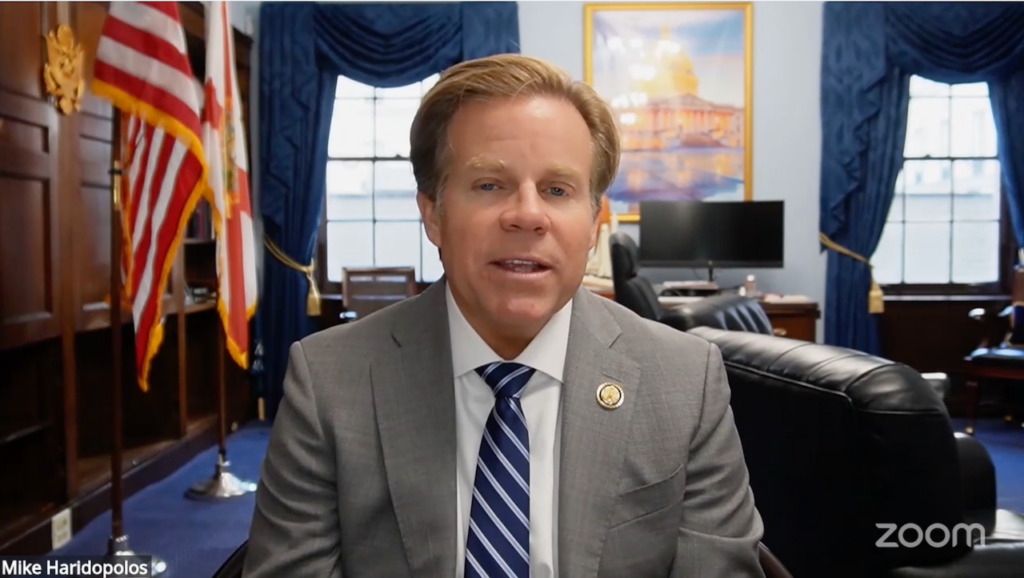
(more…)Keith’s note: In opening Space Science Week at the National Academy, Rep. Mike Haridopolos (FL-08) just said that President Trump “has spared NASA from the large budget and personnel cuts” due to the importance of Artemis and “The only people who left are those who took the buyout.” People at NASA have already been fired and looming budget cuts will gut NASA science. Someone needs to brief the Congressman about the facts on the ground. Just sayin’.
(more…)Keith’s note: Space Science Week 2025 – March 31-April 4, 2025 “is the joint meeting of the Space Studies Board of the U.S. National Academies discipline committees in collaboration with the Aeronautics and Space Engineering Board and Board on Physics and Astronomy.” The 1 April plenary webcast is open to anyone. According to the agenda Janet Petro is speaking at 9:20 am EDT.
(more…)Keith’s note: according to the National Academies report “NASA at a Crossroads – Maintaining Workforce, Infrastructure, and Technology Preeminence in the Coming Decades” (full report) “The committee offers seven “core findings” that, in its view, rise to the highest level of priority. These issues often have cross-cutting connotations that impact more than one of the three resource areas cited in the legislation mentioned above and are interrelated. The committee’s findings regarding these high priority “core” issues are as follows:”
(more…)Advancing Diversity, Equity, Inclusion, and Accessibility in Competed Space Mission Leadership at NASA Will Require Extensive Efforts Along Entire Career Pathways, Says New Report, National Academy of Sciences “Inadequate data gathering and reporting are critical barriers to NASA’s understanding of the efficacy of its own DEIA efforts to date, and of the proposal leadership pool’s demographics, according to the report. These are necessary steps for measuring progress, and for identifying […]
Report Identifies Priority Planetary Science Missions, Planetary Defense Efforts, and Strategic Investments for the Next Decade “A new decadal survey [Origins, Worlds, and Life: A Decadal Strategy for Planetary Science and Astrobiology 2023-2032] from the National Academies of Sciences, Engineering, and Medicine identifies scientific priorities and opportunities and makes funding recommendations to maximize the advancement of planetary science, astrobiology, and planetary defense in the next 10 years. The recommendations by […]
NASA Makes Progress Toward Planetary Science Decadal Priorities, National Academy of Sciences “Despite significant cuts to NASA’s Planetary Science Division budget early in this decade, the space agency has made impressive progress in meeting goals outlined in the 2013-2022 planetary decadal survey by the National Academies of Sciences, Engineering, and Medicine, says a new midterm assessment from the National Academies. The report notes that the agency met or exceeded the […]
NASA Should Continue its Large Strategic Missions to Maintain United States’ Global Leadership in Space “NASA’s large strategic missions like the Hubble Space Telescope, the Curiosity rover on Mars, and the Terra Earth observation satellite are essential to maintaining the United States’ global leadership in space exploration and should continue to be a primary component of a balanced space science program that includes large, medium, and smaller missions, says a […]
NAS Report: Review of the Restructured Research and Analysis Programs of NASA’s Planetary Science Division “Recently, PSD reorganized the R&A program to provide better alignment with the strategic goals for planetary sciences. The major changes in the R&A program involved consolidating a number of prior program elements, many of which were organized by subdiscipline, into a smaller number of thematic core research program elements. Despite numerous efforts by PSD to […]
NAS Report: Small Business Innovation Research (SBIR) at NASA “The U.S. Congress tasked the National Research Council with undertaking a comprehensive study of how the SBIR program has stimulated technological innovation and used small businesses to meet federal research and development needs, and with recommending further improvements to the program. In the first round of this study, an ad hoc committee prepared a series of reports from 2004 to 2009 […]