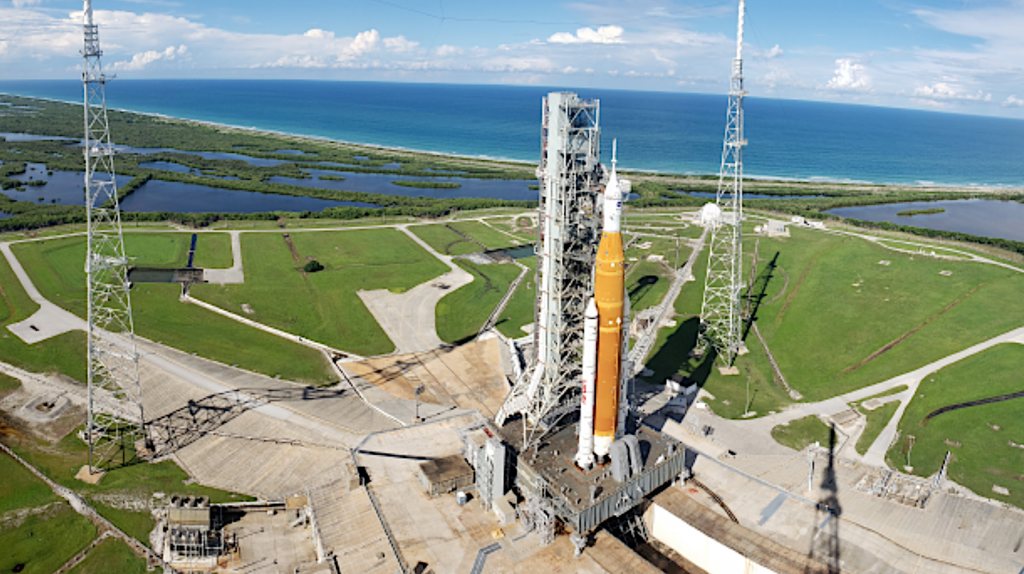
Ares 1-Y is Toast

Pull the plug on Ares, editorial, Orlando Sentinel

"But even if the station gets a five-year extension, as it should, Ares I would be available to fly there for just three years under the best-case scenario envisioned by the Augustine committee. NASA has projected that developing Ares I and a crew capsule to accompany it will cost $35 billion, but the Government Accountability Office came up with an estimate of $49 billion. The Augustine committee predicted that the entire Constellation program, which includes Ares I, Ares V, the Orion capsule and the Altair lunar lander, will run $45 billion over budget."

NASA Blog: Constellation: Managers reevaluating Ares I-Y flight test

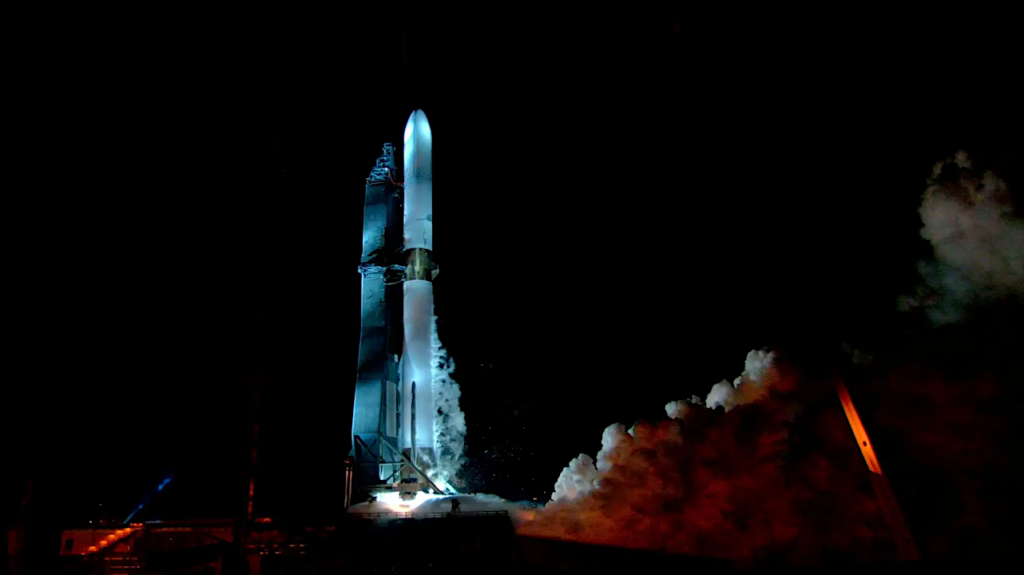
"Constellation program managers agreed to reevaluate the proposed Ares I-Y flight test during an Oct. 30 Control Board and plan to take the decision up the ladder to management at NASA Headquarters soon. The decision could result in the removal of the Ares I-Y flight from the manifest in order to better align test flights with evolving program objectives."

Keith's 29 October note: Given that the Constellation Program's Control Board decided last Friday to recommend canceling Ares 1-Y, reality seems to be descending upon the Ares 1 effort - despite the spin Jeff Hanley is trying to put on it.

NASA Drops Ares I-Y Flight-test, Aviation Week

"Hanley said on Nov. 3 he has recommended to NASA headquarters that the Ares I-Y test planned for March 2014 be canceled because the J-2X engine needed to propel the upper stage won't be ready in time to support that test date. The problem is money, he said. "Because of the cost-constrained environment that we've been in, I just cannot get an engine to that vehicle soon enough," Hanley said."


Advertise Here

59 Comments

| Leave a comment

Funny how the Orlando Slantinel's original criticism of Ares 1 to save jobs at KSC (in favor of Direct X.0) didn't turn out the way they intended. If Ares 1 is canceled, whatever commercial launcher is chosen for manned missions will likely experience similar slips and budget overruns that critics cite for canceling Ares 1.

Commercial launchers will result in even more job losses at KSC.

If the commercial vehicle of choice ends up being Falcon 9 and Dragon, we'll still be ahead of the game on money and time when it is compared with Ares/Orion.

Unlike AresI-X, Falcon 9's first test flight will be with a 100% complete rocket. It also seems that SpaceX has decided to test fly Dragon on that maiden flight. The odds favor them getting the job done faster and for less taxpayer money.

IMO NASA should focus on a true space shuttle derived HLLV with either Orion or better yet a exploration craft that is permanently parked in LEO when not in use. Let Dragon carry the crew up to this ship and off we go.

First, the editorial was referring to Ares I ONLY, not Orion. The editorial was NOT suggesting Orion be cancelled. In fact, any commercial launch alternative would be required to fly Orion. So if it's Falcon, then Falcon would have to be topped by Orion, not Dragon. That much said...

Good luck finding any NASA astronauts willing to be merely passengers on someone else's spacecraft without having the ability to fly, control and dock the spacecraft themselves. And good luck finding any NASA astronauts willing to fly on a spacecraft in which they didn't have a hand in designing or ensuring its safety ratings are as stringent as NASA's. Good luck to SpaceX if they want to try to design a manned spacecraft that passes NASA's human-rating requirements. And if SpaceX does, good luck in having it ready to fly before 2018. And... if you say "fine, then leave NASA astronauts out of it", then good luck in getting NASA and the 14 partner governments to approve of Dragon getting anywhere near the space station.

Requiring NASA astronauts to stand in line as mere customers for a commerical launch service to low Earth orbit is as stupid as requiring the Army and Marines to fly Southwest Airlines into the battlefields of Afghanistan instead of using their own C-17's designed specifically for the mission and completely under the military's control, scheduling and priorities.

Also, under the EELV program, the Delta IV and Atlas 5 launch vehicles both were two years late achieving first flight and cost double what was originally projected. The Falcon was over 3 years late making its first launch and, by the time it made a successful flight, had cost Elon Musk several times what he originally thought it would cost. Every launch vehicle and spacecraft development program in history has cost significantly more than projected and run years behind schedule. Every single one of them. Do you think a commercial launch option for NASA would be any different? Do you think it would be able to fly by 2016 instead of 2018? If you do, then you are living in a dream world where the realities of this world do not apply.

So what if NASA was forced to go the commerical route, then what? Well, our international partners in the space station program are eager to participate in the Vision for Space Exploration. So I have another question. Do you think any of our partners would be willing to let their astronauts fly on a non-NASA commercial spacecraft? I highly doubt it. For some reason, I just don't foresee the Russians being willing to put their cosmonauts on a commercial U.S. spacecraft. It just won't happen. And the Europeans and Japanese would probably be just as unwilling... in my opinion.

What that means is that if NASA is forced to go commercial, then you can forget about internationalization and NASA will be forced to go it alone. The end result of that? Well, while we're zipping around an empty and thoroughly boring libration point, the Russians and Chinese will be walking on Mars with their Japanese and European partners. Wonderful.

Speaking of internationalization, that's really the answer. It's a simple and, I would've thought, obvious answer. It was the answer to saving ISS when its costs and schedule ballooned. The $50 billion that our international partners invested in ISS was critical to its construction. Without it, we wouldn't have a space station today. And it had the side-effect of creating an cooperative international partnership unlike the world has ever seen and which makes the United Nations look like rank amateurs.

Like I said, they're eager to participate in "Moon, Mars and beyond".

So internationalize Constellation. The $30-50 billion that our ISS partners could bring to the table would more than make up for the present shortfall. Their expertise and industry would help maintain schedule and perhaps even increase the capabilities of the systems that get developed.

It's a simple answer. It doesn't mandate any sctructural changes to the Constellation architecture. It doesn't require any difficult choices and it gets around the socio-political stalemate we're in now. Most importantly, it would be an easy, non-controversial, decision for the President.

Of course, if you oppose Constellation on philosophical or self-serving grounds rather than technical or financial, this solution would be unsatisfactory. But then again, so would anything, no matter how beneficial, that saves the current program. I can't help you there.

spacearium - how much you have wrong is quite impressive.
First, you are right, it was talking about Ares I. But it was not talking about using Orion to transport astronauts to and from LEO. There is no discussion of the idea of a bunch of the commercial guys putting Orion on top of their rocket, to get to and from LEO

Second, to the issue of astronauts having ghe ability to fly, control, and dock the spacecraft - SpaceX is actively dealing with that.

Third - concerning human-rating - SpaceX is using 83 of the human-rating and safety specifications that NASA used for Ares I & Orion. In addition, Atlas V & Delta IV already meet the human-rating requirements that Ares I.

Fourth - in terms of it flying before 2018 - so, you are claiming that a vehicle that is preparing for its first flight, in Feb of next year, will be ready later than a vehicle that won't have its first flight (even using NASA's numbers) for 6-7 years? And that the vehicles that are already flying (Atlas V and Delta IV)?

Moving on to this comment

First - Requiring NASA astronauts to stand in line as mere customers for a commerical launch service to low Earth orbit is as stupid as requiring the Army and Marines to fly Southwest Airlines into the battlefields of Afghanistan instead of using their own C-17's designed specifically for the mission and completely under the military's control, scheduling and priorities. Isn't that exactly what we are doing with using Soyuz to go to ISS? Somehow NASA and its astronauts have done just fine there. In addition, I've seen no one actually put forward a reasoned arguement why the vehicle going to ISS needs to be different than the vehicle that goes to a private space station, or a vehicle that goes to deliver astronauts to Orion. Please give me a reason

Second - Yes, many rockets have had delays and cost-over runs, but the amount and time of those cost overruns have to be considered - we have spent more on Ares I already, then Elon has spent on SpaceX. And SpaceX has rockets flying, and Ares I is multiple years away from flying. And Atlas V and Delta IV are both already flying. So to answer your question, what realities are you looking at?

Third, concerning whether they'll let their astronauts fly on a "non-NASA" vehicle - if NASA has signed off on it, and is flying their astronauts on it, how and why shouldn't they be willing? Its not a question of safety.

As for internationalizing Constellation - how? Unless you are going to open the current plan up for major redesign, most of the pieces have to be done by America. Orion is to be built by LM, an American company. Ares I is to be built by Boeing and ATK, American companies. Most likely Ares V would have to be done, by American companies. And you can bet that this would also be true for the EDS. About the only option that might be available for international efforts is the Altair, but I wouldn't bet on that happening.

Commercial space flight will come. But that should have nothing to do with NASA unless NASA helps develop man-rated space vehicles for private companies. But it amuses me that some folks view companies that have never safely put a human into orbit as somehow superior to NASA which has routinely placed people into orbit and returned them to the Earth for nearly 50 years.

The Ares 1/V architecture needs to be terminated in favor of NASA's much cheaper and quicker to develop SD-HLV concept which could still deliver more than 47 tonnes into lunar orbit per launch.

Marcel F. Williams

"Good luck finding any NASA astronauts willing to be merely passengers on someone else's spacecraft without having the ability to fly, control and dock the spacecraft themselves."

First of all where do you get the bizarre idea that a commercial human launch system wouldn't include controls for the astronauts? Nobody has ever proposed such a thing. SpaceX's Dragon has always been designed to have controls for the astronauts -- the cargo version obviously doesn't need them, so that version doesn't have the controls, but the plan has always been for the human version to have them. And the other leading contenders for commercial human launches use EELVs with some variant of Orion, which would also have controls for the astronauts.

Secondly, while astronauts would definitely prefer to have controls, and argue strenuously for them, the idea that any astronaut would turn down an opportunity to go into space just because they couldn't be at the controls is simply nuts. Astronauts would do anything to go into space.

"Good luck finding any NASA astronauts willing to be merely passengers on someone else's spacecraft without having the ability to fly, control and dock the spacecraft themselves."
Er Peggy Whitson? (Tough landing tho!)
http://news.bbc.co.uk/1/hi/world/americas/7036805.stm

If I were a REAL astronaut I would grab ANY chance in getting up there! Any REAL astronauts concur?

"its safety ratings are as stringent as NASA's"
LOL (That WAS irony wasn't it?)
Man rating is largly a Myth. (Or a movable goal post.) As a REAL Rocket scientist once said:
"What, precisely, are the precautions that we would take to safeguard a human crew that we would deliberately omit when launching, say, a billion-dollar Mars Exploration Rover (MER) mission? The answer is, of course, “none”. While we appropriately value human life very highly, the investment we make in most unmanned missions is quite sufficient to capture our full attention."

I think that you're forgetting that the Russians have their own perfectly well-proven crew launch system, the Soyuz, and are also building a six-seat replacement vehicle that might even have superior performance to Orion. So, overall, I can't see any of NASA's international partners worrying too much to the implications of 'commercial' crew launches.

FWIW, 'commercial' actually means a government-purchased LV and spacecraft designed an built by an external organisation and jointly operated by NASA and that company. In other words, not too different from what happens today. NASA will still decide on what spacecraft are suitable for its requirements. For this reason SpaceX has hired a former astronaut at considerable cost to ensure that the Dragon is acceptable to the Astronaut Office.

That said, if the two alternatives are being 'spam-in-a-can' until you reach the ISS or the mission spacecraft or not going into space at all, I wonder how many astronauts will be so determined to stick to wanting to be the pilot. This is especially the case when you consider that being the 'pilot' will mostly mean ensuring that the autopilot does its job properly during rendezvous and docking.

This might come as a shock to you but military personnel already use commercially leased airliners for transfer to the theatre of operations. They are operated by USAF crews for that specific flight but are supplied and maintained by the airlines themselves. This is probably somewhat similar to how commercially-sourced NASA crew transfer will work in the real world.

Just a note to Keith: I think that the term "lynch mob" is somewhat inflamatory and inaccurate. It implies a group driven by irrational anger, hate and fear. The majority of the opponents of the Ares-1 are motivated by genuine concerns, both engineering and budgetary as well as a love for space exploration and a desire to see it well-served by NASA's next generation HSF system.

NASA has already "gone commercial". The Russians sell passenger seats on their non-NASA Soyuz and our astronauts and tourists are lined up to fly in them. Not only that but cargo is paid for too.

The Russians will do what makes the most money and gives them the most power. Right now it looks like they're going to be the only game in town for a while. They have the power because we let them have it when we quit. That's right quit. No one is forcing the shuttle to be abandoned. It's being sacrificed for a dubious pie-in-the-sky, TBD.

Russian and American astronauts do what their told.

Flying a solider on a commercial airliner frees up the C-17 to do stuff it was designed to do. It's not stupid, it's planned. There is a lot more to fighting a war than having just boots on the ground.

I haven't seen any info or comments on whether the Soyuz is "man-rated" per NASA requirements. I've been wondering about that ever since the "firmware" problems.

spacearium @ comments 3 and 4...

Noise :)

The facts are that

1. Falcon 9 and Dragon were and are being designed and built around many of the exact same NASA safety standards that you seem to think are some deep dark secret that only NASA knows.

2. Afghanistan is not an appropriate comparison. The current situation is much more akin to an aging U.S. WW II vet insisting that he be paradropped behind enemy lines... whenever he crosses the Canadian border.

NASA insisting that "their" astronauts can take only NASA launchers up to orbit is like the U.S. Navy insisting on using carrier-launched Harriers to get sailors from their houses to the docks... instead of just calling a cab.

In fact... with development costs... each Ares I launch will cost more than some aircraft carriers :)

The operational costs of an Ares I launch with development costs included are estimated somewhere between $150 - $250 million per launch. The estimated cost as of 2009 for the Gerald R. Ford class aircraft carrier (1 carrier) currently slated to be finished in 2015 is $9 billion and this does not include the development costs of over $5 billion.

That aside, it is simply wrong to compare costs between vehicles that have fundamentally different purposes and are designed for different environments.

While I am a big fan of SpaceX, the essential point being made is that SpaceX is nearly 3 years behind in the launch of the first Falcon 9 prototype, the lighter version and not the heavy F9 necessary to launch a human crew, which was originally scheduled in 2007. This development delay is typical across the industry. There is simply no evidence that SpaceX or any US company will have human spaceflight capability until at least 2015 at this point.

What is more, developing a successful crew launch system is but one aspect of commercial human spaceflight. Any company will need to demonstrate the commercial viability of that launch system and in the absence of any market outside of the ISS, that will be a difficult task to accomplish.

The real point here is that commercial human spaceflight is in its embryonic stage and the market is still very immature and limited so there is no predicting how commercial spaceflight will develop. Should NASA or any other nation's space agency rely on an unpredictable potential in the absence of a mature market?

"Good luck finding any NASA astronauts willing to be merely passengers on someone else's spacecraft without having the ability to fly, control and dock the spacecraft themselves."

This is, flat out, one of the dumbest post I've ever read, ever, in my life, and I was once told off, "You are wrong; satellites are stationary".

You can find people to go on one way trips to Mars.

You can find people who will learn Russian & sit in a tube for two years so they can PRETEND they're going to Mars because they think its conducive.

Astronauts ride an automated launch to space, dock, spend six months in a space station that does no maneuvering except for reboosts, then ride an automated landing except for a few MINUTES where ONE dude pilots the Shuttle's touch down.

Find me an astronaut who will quit over this, I'll find you fifty million volunteers.

SD-HLV is an unacceptable compromise. It only makes sense if we were still planning to fly the shuttle. The cargo carrier is heavier than the planned cargo. Too many design compromises. If we need things up and running real quick, then we should use Direct Launcher an inline-HLV

"Requiring NASA astronauts to stand in line as mere customers for a commerical launch service to low Earth orbit is as stupid as requiring the Army and Marines to fly Southwest Airlines"

The army regularly uses commercial aircraft to shuffle troops.

Every time I fly through ATL there's a hundred bajillion troops waiting for their flights.

Every time I'm at the train station here in Poznań, there's Polish troops, in uniform, taking the train.

NASA astronauts ALREADY take paid flights, sold by the Russians.

"...to fly Southwest Airlines into the battlefields of Afghanistan instead of using their own C-17's designed specifically for the mission"

You see, a key difference between staff rotation and battlefields is that in a battlefield someone is shooting at you.

Go check if there's hostiles at ISS spraying bullets at oncoming Shuttles and get back to me.

"some folks view companies ... superior to NASA"

Marcel, My amusement comes from NASA requesting, with a straight face, ~$40 billion to build a NASA-only medium/heavy launch vehicle (Ares 1) when these inexperienced companies that have "never safely put a human into orbit" routinely and reliably launch multi-billion dollar spysats on launch systems that cost orders of magnitude less to develop than NASA is asking for.

It's not that commercial launch advocates think that NASA doesn't know more about human spaceflight than private firms. It's that NASA has lost nearly all credibly by pursuing an exploration architecture requiring a budget that is completely detached from reality.

It's almost as if commercial space launch is our only hope now since NASA has screwed up "the next Shuttle" so bad, so many times.

>I think that you're forgetting that the Russians have their own perfectly well-proven crew launch system, the Soyuz, and are also building a six-seat replacement vehicle that might even have superior performance to Orion.

As I have a few relatives, thru marriage, "working" on that Rooskie "replacement vehicle" its nothing more than a mockup and according to them they've received ZERO funding for it from Moscow for almost two years now...they're economy is worse off than most others right now despite the propaganda the Kremlin kicks out.

Keith's 29 October note: Given that the Constellation Program's Control Board decided last Friday to cancel Ares 1-Y, reality seems to be descending upon the Ares 1 effort.

This is a misleading statement. Control Board was wanting to revise the launch to improve launch testbed by including more systems in the launcher like the J-2X engines for a test flight earlier in the launch manifest. They felt the 1-Y flight was too late in the manifest to be helpful in the Ares I development. The change is not a prelude to Ares I cancellation, and the discussion concerning the revision had been ongoing.

Good luck finding any NASA astronauts willing to be merely passengers on someone else's spacecraft without having the ability to fly, control and dock the spacecraft themselves.

Unless someone actually provides a reference for this claim SpaceX meant the crew to be simply helpless passengers from the start, I'll have to call that a FUD attack. I've been hearing this for a while now so would like to know where this argument comes from.

The term "lynch mob" is accurate. Right now, all the different pundits who are each touting their own alternatives to the Ares strategy agree on only one thing, that the Ares needs to be cancelled (in order to allow their particular alternative to be chosen). However, if Ares is cancelled, they'll all be at each others' throats in an instant-- there is no consensus about what to replace Ares with.

My guess as to the most likely actual chain of events: Ares gets cancelled, then (after a small delay) one of the alternatives gets chosen, and (after another small delay) we work on it for about three years, during which all the attackers get out their sharp knives while the real world of delays and engineering challenges emerges, and nothing actually gets launched. Then the new approach gets cancelled too, because there's yet another approach that looks even better on paper. Repeat.

Frankly, I like any of the alternatives. But what I don't like is NASA changing direction every few years, and not flying anything at all.

SpaceX is nearly 3 years behind in the launch of the first Falcon 9 prototype, the lighter version and not the heavy F9 necessary to launch a human crew, which was originally scheduled in 2007.

You are true they are a couple of years behind with their F9 development, however it is not true a Falcon 9 Heavy is required to carry a crew inside a Dragon. Vanilla Falcon 9 is sufficient for that, just as Atlas V 401/402 would be for some other commercial crew capsule - both vehicles in fact have roughly the same LEO capacity (F9 at least on paper).

I don't think anyone realistically suggests Orion itself should fly on a Falcon 9 Heavy so that argument is moot. It's clear Orion would only fly on Atlas/Delta Heavies if an ELV option is exercised.

On a side note, I always find it interesting that when proponents of a NASA-designed vehicle bash "commercial" providers, they always seem to concentrate on the weakest of the "bunch" - SpaceX. ULA in the meantime doesn't even seem to exist to them. Maybe in their minds they'd like it if it were so, given ULA's demonstrated track record and reliability and not empty PRA numbers and statistics down to 4 significant digits.

Au contraire, I chose SpaceX because I consider that company to be the stronger, more innovative company than big aerospace defense contractors like Boeing, Lockheed Martin, ATK, Northrop Grumman, or Lockheed & Boeing subsidiary United Launch Alliance. When commercial aviation was in its embryonic stage Boeing, Lockheed, Douglas Aircraft, and Pratt & Whitney were the leading innovative new startup companies leading the charge in the development of commercial aircraft against big corporate giants like Ford and General Motors. In the development of human spaceflight Boeing and Lockheed are now in the place of the automakers, while SpaceX, Orbital, Masten, and XCOR are the new smaller companies who are leading the charge and are more likely to succeed.

@Gary Miles - The single-core, 10-ton-to-LEO Falcon 9 is the crew launcher. The 3-core, 25-ton version will be for launching station modules. The rocket on the pad at the Cape right now is for crew and cargo transfer.

SpaceX will be able to launch crews in '12 or '13 at their current rate of progress. By 2016 the market will include ISS, Bigelow's demo station and either Excalibur-Almaz or Galactic Suites. The next step is for people like you and I to found new companies to apply those capabilities.

@ Geoffrey -

NASA needs to focus on what it does really well and get away from things it routinely fails at. NASA does space ops, robotics and deep space operations along with R&D in ways no other organization can. What it has routinely failed to do is develop launchers and crew capsules for the "first mile". NASA hasn't successfully developed a human launch vehicle in 30 years - and it is not all Washington's fault.

NLS, OSP, X-33, X-38, SLI, VSE/ESAS etc etc compared to ISS, Mars rovers, SOHO, Apollo, Cassini, Galilleo. Focus on core competency.

I didn't specifically mean you Gary when I talked about commercial bashers, it was a general observation. When I say SpaceX is weaker - I mean it in the sense of lack of demonstrated record, their inexperience (whether perceived or real), etc. IOW, most of the things those who look for ammunition against commercial will pick on.

I agree with you any commercial crew would not likely be as soon as we'd all like, but say 2014 does look pretty realistic to me. Certainly years before Ares I could be ready.

"SD-HLV is an unacceptable compromise. It only makes sense if we were still planning to fly the shuttle. The cargo carrier is heavier than the planned cargo. Too many design compromises."

Here here. There's a disadvantage to a side mount for cargo. Shuttle had to do it because the orbiter had engines... but for cargo, a side mount reduces your payload to LEO. We don't need a half-assed compromise, we need a good HLV.

Dave

Regarding Human rating: Word.

(I'm not an astronaut though; sorry)

Ladies n Gents,

On my three deployments overseas I have always flown a commercial carrier to a location close to but outside the battle area.

We would then jump on a C-17 to "ingress" into said country.

But why?

This allowed the US Military to maximize its use of resources attacking the problem and not wasting needless flight hours on airframes transiting the globe. I flew on 2 757s and a 747 to be precise.

Do C-5/C17 aircraft still do missions around the world? Yep, but they do not regularly transit troops like the poster above says.

Apply this to NASA:

SpaceX to get the astronauts into space and a J-24X to do the lifting. Its win win.

VR
RS327

@ Gary Miles


"There is simply no evidence that SpaceX or any US company will have human spaceflight capability until at least 2015 at this point.

What is more, developing a successful crew launch system is but one aspect of commercial human spaceflight. Any company will need to demonstrate the commercial viability of that launch system and in the absence of any market outside of the ISS, that will be a difficult task to accomplish.

The real point here is that commercial human spaceflight is in its embryonic stage and the market is still very immature and limited so there is no predicting how commercial spaceflight will develop. Should NASA or any other nation's space agency rely on an unpredictable potential in the absence of a mature market?"

Excellent points!

The space industry needs a private launch capability. But NASA would be extremely foolish to be dependent on a private launch capability that currently-- does not exist-- and is only at it's embryonic stage.

Furthermore, why should the tax payers have to pay the higher cost of having-- a private profiteering middleman-- in order for NASA astronauts to reach low Earth orbit?

Marcel F. Williams

"I chose SpaceX because I consider that company to be the stronger, more innovative company"

Based on what?

Number of different types of launch vehicles operated?
Numbers of pads and launch sites?
Common core boosters that can be adapted to different performance requirements?
Number of launches flown?

Spacex has yet to launch any but a small class spacecraft and why do they get all the fawning? Falcon 9 is not a given, there is a real chance that may not work.

"SD-HLV is an unacceptable compromise. It only makes sense if we were still planning to fly the shuttle. The cargo carrier is heavier than the planned cargo. Too many design compromises. If we need things up and running real quick, then we should use Direct Launcher an inline-HLV"

SD-HLV with an EDS stage is cheaper and faster to develop than DIRECT. And with our current budget constraints, we need something that is cheaper and faster to develop!

The SD-HLV could also place up to 100 tonnes into LEO and up to 47 tonnes into lunar orbit per launch. Plus you'd be using a reliable launch architecture that hasn't had any serious malfunctions in more than 20 years. I also fear that the extra cost of developing the new Jupiter booster might delay the more immediate funding of the Altair lunar lander perhaps delaying a return to the Moon by 5 or 6 additional years.

But even with delays, I would favor DIRECT over the SD-HLV if they added a Jupiter-SSTO vehicle (without the SRBs) to the family since that would be the perfect simple and extremely safe-- single stage to orbit expendable rocket-- for the private commercial manned space launch industry that might help to get a lot more of us into space.

But I should also note that quickly developing the SD-HLV so that we can quickly replace the shuttle and return to the Moon doesn't preclude the development of more DIRECT or even Ares V types of vehicles in the near future since NASA should have several billion dollars of extra funds annually to work with once the developmental phase commitments for the SD-HLV, EDS, Orion, and Altair are over.

Marcel F. Williams

My fear is that said lynch mob will get Ares 1/V canceled and nothing will replace it.

People seem to put a lot of faith in commercial development, yet these same commercial entities have yet to show reliable and repeatable access to orbit. While it is a good idea to pursue, depending on it until these firms can show they can do the job - again, safely, cheaply, reliably, and repeatedly - may be overly optimistic.

What happens, for example, if SpaceX's upcoming launch fails miserably? What then?

All of this going around in circles from within the political circles is only costing more and more time. The time has come for the president and the Congress to make a decision, for the people who are the instruments of this decision to perform and for our space program to move forward.

Right now, all we are doing is moving hot air. Bartolomeu de Gusmão proved hot air rises in 1710 and he failed to fly. So will this endless debate.

@john.kavanagh

NASA should have never chosen the Ares 1/V architecture over the SD-HLV or DIRECT, IMO.

But private companies will only have bragging rights over NASA as far as their manned space programs are concerned-- only when these private companies actually have commercially successful manned space programs! And I'm willing to bet when most of these companies finally fly people into orbit, they'll mostly be using rocket boosters originally developed by the US or Russian governments.

Marcel F. Williams

People seem to put a lot of faith in commercial development, yet these same commercial entities have yet to show reliable and repeatable access to orbit. While it is a good idea to pursue, depending on it until these firms can show they can do the job - again, safely, cheaply, reliably, and repeatedly - may be overly optimistic.

And once again, this illustrates the point I made above. Once again, commercial does not equal SpaceX or Orbital only.

Worried about "reliable and repeatable access to orbit"? Three words for you: United Launch Alliance

No, the Dragon did NOT originally have displays and controls! SpaceX even comments on this, they hired an ex NASA crew office guy to get some displays and controls in there...

There was even another nasawatch summary that linked to this...

http://www.orlandosentinel.com/news/space/orl-commercial-rocket-hopes-101309,0,7735726.story

"Now, 50 years later, SpaceX has hired its own former astronaut, Ken Bowersox, to make Dragon more astronaut-friendly.

"We're, of course, trying to allay some of those concerns," says Bowersox, the former director of NASA's Crew Operations Directorate. "We'll do what makes sense from the point of view of using humans to increase the reliability of the whole system. To do that, we have to give them displays and controls."

"Go check if there's hostiles at ISS spraying bullets at oncoming Shuttles and get back to me."

That was purely an accident and only happened because the shuttle strayed into the conflict arising trom the Science Power Platform's ill-advised attempt to annex the Columbus module.

And everyone knows about the Oerlikon 20 mm cannon hidden inside Canadarm2.

I've been involved in the aerospace industry and space community since the mid-1980's, so I know where to place my trust in regards to "commercial" space. The only players who succeed are the ones funded by vast sums of money and huge multi-year government contracts: e.g. EELV, MLV, SFOC. SpaceX and United Launch Alliance fit in there, of course. But... hmm... large sums of money and huge government contracts -- seems to me that describes Ares I/V (Boeing/LockMart/ATK) quite well. See, like was pointed out in the Augustine committee hearings, there's a difference between being a commercial supplier on the open market - i.e. truly "commercial", and being a prime contractor. Ares I and, to some extent, Falcon 9 and Dragon fit within the prime contractor model. So does EELV. There are NO suppliers on the open market that NASA can act simply as a customer buying a ride. And none of the startup companies out there right now will be able to fit that role in the foreseeable future. The only business model that can get the job done is the prime contractor model. There is no and will be no TRUE "commercial" supplier. So then the question is, do you want the prime contractor to be Boeing/LockMart/ATK, SpaceX or ULA? Those are the only potential players. That's it, no-one else. alt.space, NewSpace or whatever you want to call it will not play a role in NASA's transportation needs for human exploration and there will never be a day when NASA buys a ride on a "commercial" vehicle the same way you buy a ride on a charter aircraft. It just won't happen. Sorry guys, the truth hurts I know.

"The only business model that can get the job done is the prime contractor model. "

Incorrect. It is just a matter of the contracting mechanism. NASA no longer buys launch vehicles or hardware for unmanned spacecraft. It buys launch services. Basically, place xxx lbs into this orbit. It is up to the contractor do determine the means to do it. The same thing can be done for crew. Either fly x crew to the ISS with these safety requirements*. Or fly this manned spacecraft to x orbit. This is the "commercial" model that people want.

Sorry, spacearium but your are wrong

I got the impression that spacearium was addressing who pays for the development of a system. If the government pays for the development, then it is a prime contractor model. I believe the Augustine report stated that the government would probably need to pay for the development and the return on investment would be reduced operational cost.

You've got to be kidding? $150 to $250 million per flight for Ares 1? Whoever came up with those numbers is dreaming. The cost of the upper stage alone will cost that much. When you add up all the civil service and contractor labor and the hundreds of facilities all across the country charging to Ares 1, a launch will cost a half a billion dollars. Anyone that says different doesn't understand NASA. History has proven the "pi factor" theory of cost estimating for NASA. If at PDR we say it will cost $200 million, you can bet it will cost that time pi, or over $600 million. This is as sure as death and taxes. And forget about rolling in development costs, that puts the cost per flight well over a billion dollars.

As for Ares 1-Y, that specific test flight is canceled by title and configuration, but a test flight of Orion will occur in that timeframe. It may be called something else and flown on a different vehicle. Orion is here to stay, Shuttle will retire when the flight schedule is complete (probably early 2011, not at some arbitrary date), ISS will be extended to 2020. The only questions are what will Orion fly on for LEO, what will it fly on for beyond LEO and what will the HLV look like? We will continue the space program, but it will look a lot different (and I think a lot smarter).

The ARES-1X met and or exceeded expectations so much so that it provided the program an opportunity to eliminate 1 test flight from the schedule. Hope Space X can do the same.

Liability and indemnification are real issues to address in commercial crew transport to ISS and LEO. One consideration is to completely commercialize ISS. Make it a GOCO with contractor astronauts. I imagine SpaceX and others can hire employees willing to fly on their vehicles. And then NASA escapes a lot of the tricky legal issues of flying government personnel on commercial rockets.

According to the article, they intend to cancel the flight due to the lack of a J2-X engine... which wasn't going to be fired anyway as this was an abort test. The difference between mounting a rocket engine and putting so many bags of concrete in its place is debatable.
Assuming funding materializes, they'll opt for a sooner test flight of the abort system which is more politically convenient.

As a non rocket scientist I think we are stuck with too few options, but there's not much else to do with the budget we've got.
The main reason to think Ares is wrong involves also believing that the same government with the same players can juggle similar components and manage to shave off half the costs in a schedule half as long... and all this without doing numerous test flights.
Something tells me that just wont happen.

I think that SpaceX and orbital should have been put forth as Soyuz substitutes for the near term. If we're going to the moon or mars then do Ares and suffer the costs. If not, lets stop messing around and find actual solutions to the high price of space travel.
A wandering path is no good when the reasoning for not doing exploration missions will always come back to costs. If that is the case then we have to get back to basics of making spaceflight affordable.

@ Eagle_Eye

Your post is a joke. Ares I-X did not reduce the requirements for other tests. Ares I-X actually increased requires for more tests. The parachutes will need more testing and the sep sequence will need to be looked at. The lack of a J-2X is what is canceling Ares I-Y.

Get you facts straight and know something before posting.

so I know where to place my trust in regards to "commercial" space ... there will never be a day when NASA buys a ride on a "commercial" vehicle the same way you buy a ride on a charter aircraft. It just won't happen. Sorry guys, the truth hurts I know.

Well I guess that settles it! Thanks for the clarity, spacearium. It's time for Bezos, Bigelow, Branson and Musk should just close up shop and wait for the government to show them the right way to conduct human spaceflight. They should just sit tight and wait for those heavy lifter and space capsule design specs to come down from on high from the Centers.

Falcon 9 and Dragon fit within the prime contractor model

Yes, that makes sense. Elon Musk's private financing of the Merlin engine design, the prerequisite flights of the Falcon 1, the comsat payload adapters and the standard launch service pricing for flights to GTO all indicate that Falcon 9 is part of a NASA prime contract. That was never signed.

It bothers me that the J-2X wouldn't be ready for flight as of March 2014. I haven't been able to find an estimate of when it might be ready. Some people must have thought there was a chance it would be ready in early 2014. Does anyone know when the J-2X is expected to be ready? It seems like the J-2X could become a significant delaying factor.


You've got to be kidding? $150 to $250 million per flight for Ares 1? Whoever came up with those numbers is dreaming. The cost of the upper stage alone will cost that much. When you add up all the civil service and contractor labor and the hundreds of facilities all across the country charging to Ares 1, a launch will cost a half a billion dollars

According to the Augustine report, a single Ares 1/Orion flight is estimated at $1 billion dollars, not including ANY infrastructure overhead.

IIRC, the official plan was for the first all-up Ares-I tests with unmanned Orions to take place in late 2014/early 2015 (Orion 1 and 2). However, I don't know if that is still the case. With NASA guardedly and tentatively moving their IOC estimate for the Orion/Ares-I system to 2017 in the post-Ares-I-X press conference it is possible that the budget issues have pushed the schedule for developing J-2X further to the 'right'.

IMHO, the issues with J-2X, plus the work both ULA and the DIRECT team have done proving that a multiple RL-10B-2-powered EDS can work, both indicate that J-2X should be either de-prioritised or even cancelled altogether to compress the schedule.

Dennis Wingo,

Where are you coming up with this $1 billion per launch of the Ares I/Orion from the Augustine report? Please cite section and page number. Thanks.

Gary

Eagle Eye, SpaceX already did exceed their schedule by moving Dragon test article up to the first Falcon 9 flight.

Gary, they may be citing that number based on Ares I-X. I would argue that CxP is being "sized to the budget plus" instead of economizing on operations so that 2-4 flights per year of Ares-Orion is going to be most of the HSF and therefore cost in budget terms about $1G each.

The outrage in that projection is we could fly 20 astronauts on Soyuz for the price of 4 flown on Ares-Orion.

@Ben the Space Brit:

I can understand why the J-2X would be chosen for development, since it would avoid needing to cluster several smaller engines. There seems to be a lack of operational LH2 upper stage engines more powerful than the RL-10. I believe they also thought that working off an existing design would streamline development more than has been the case.

Does anyone know what happened to the MB-XX engine series, that was a joint Mitsubishi Heavy and Rocketdyne program? There were some tests done, though not of a complete engine.

The Ottobrunn 300 N is also interesting, though it's a relatively low Isp pressure-fed engine, and doesn't seem to have any U.S involvement.

The J-2X avoids the complications of having foreign partners, of course, which I'm sure was a major point in its favor. If it's going to be significantly delayed, though, I think that will push things more towards Ares I cancellation, rather than doing a redesign using RL-10s.

Gary, look at page 90, paragraph 2.

"When it begins operations, the Ares I and Orion would be a very expensive system for crew transport to low-Earth orbit. Program estimates are that it would have a recurring cost of nearly $1 billion per flight, even with the fixed infrastructure
costs being carried by Ares V."

So its even worse than the much maligned shuttle costs which I assume carry all of the infrastructure costs. Read it and weep.

Well to answer my own question I found the reference in Section 6.4.4 on p. 90 of the report. But the high recurring cost is not with the Ares I first stage but the Orion spacecraft according to this statement:

When it begins operations, the Ares I and Orion would be a very expensive system for crew transport to low-Earth orbit. Program estimates are that it would have a recurring cost of nearly $1 billion per flight, even with the fixed infrastructure costs being carried by Ares V. The issue is that the Orion is a very capable vehicle for exploration, but it has far more capability than needed for a taxi to low-Earth orbit.

The report maintains that NASA should go ahead and develop the Orion spacecraft. Then how will this recurring high cost due to Orion be resolved through use of commercial launch systems? By reducing its capabilities? Why would that reduction work with Ares I?

Thanks dbooker, for some reason I could not see some of the last comments yesterday. I went back through the report and found the reference. I still find that cost number hard to believe, especially given the enormous amount of maintenance that the space shuttle required between each launch. The report attributes the high recurring cost to the Orion though and not Ares I. So I am puzzled how commercial services could reduce that cost especially in light of the report's suggestion that NASA should go ahead and continue developing the Orion.

Gary, as an example if Ford built a Focus only for you it would cost you $1 billion. By mass producing for mass sale it only costs $30K.
Same goes for launch vehicles. Whether they are Atlas or Delta from ULA or Falcon or Taurus from SpaceX or Orbital. All of these launchers have other customers besides NASA unlike Ares 1.
Since it was decided that a capsule would be the safest launch vehicle and Orion is the chosen design this would proceed but with a launch booster that would be cheaper and hopefully available sooner and perhaps even with greater capabilities than the Ares 1.

I didn't want to waste space making the same reply to so many comments equating the Soyuz with a commercial spacecraft. It is not. It is a government owned and managed system: Russian Federal Space Agency and the Russian Space Forces. It is not at all a commercial vehicle and NASA does not "buy" rides on it over the commercial marketplace with commercial contracts as it purchases EELV flights for unmanned spacecraft through the Launch Services Program. In point of fact, the Soyuz is more comparable to the Space Transportation System in that it is a state-run enterprise. As such, NASA astronauts flying aboard Soyuz cannot be compared to riding on Dragon or any commercially-available spacecraft, when they become available. Finally, Soyuz has been operational for 30+ years. Dragon has been operational for none. So please, it is simply intellectually disingenuous to make the argument for commercialization by using the example of Soyuz.

Ben, we maybe agree and disagree at the same time on something. If NASA were to utilize so-called "commercial" transportation options, you are correct that it wouldn't be commercial, per se. It would most likely be more along the lines of a prime contractor model where the "supplier" jointly works on the vehicle with NASA alongside and would be contracted by NASA to provide the vehicle and associated services. But it would not be as if NASA opened a catalog of launch service companies and phoned in an order.

As I stated before, and this is in response to "Me" as well, the only model that is feasible for NASA's human spaceflight transportation requirements for the foreseeable future is the prime contractor model. It may have some aspects of true commercialization, but it will still be a prime contractor/contractee arrangement. And notice, I said HUMAN spaceflight transportation. The model for unmanned launch services is different, and it works, but that is because the requirements of unmanned vs. manned launch are vastly different. I'm sure some would like to equate the two, but the reality is launching satellites is a much different kind of operation than flying people.

I'm sorry to all the proponents of commercialization, but that's simply the way life is right now. I too want to see a vigorous commercial space industry. I live on the Space Coast so the more the space industry grows, the better it is for me personally. I don't hate the industry, but I also am enough of a pragmatist to see reality for what it is, not what I wish it could be. I do not believe that just because something has the word "commercial" in its description automatically makes it better. There is no magic bullet for the problems of access to space, and "commercialization" isn't one either.

"The model for unmanned launch services is different, and it works, but that is because the requirements of unmanned vs. manned launch are vastly different."

No, they are not. There is no differences in the LV processes to launch a billion dollar national security payload, a probe with nuclear material or a manned spacecraft. The only difference in the boosters is a health monitoring system. Of course, the pads will have some mods for crews access and spacecraft servicing but that does affect the LV.

OSP was going to follow the model for unmanned spacecraft.

"I'm sure some would like to equate the two, but the reality is launching satellites is a much different kind of operation than flying people."

Only an outsider would say that. That is the problem, people who have not worked on ELV's don't have any idea of the processes involved. If they worked on the Shuttle or ISS, their view is even more distorted.

Leave a comment


Monthly Archives

Mortgage Lead

online bingo latest online bingo game reviews, bonuses and bingo news

Play online bingo at the top bingo sites.

Interested in Space Travel, try the next best thing, name your own star.

About this Entry

This page contains a single entry by Keith Cowing published on November 3, 2009 11:57 PM.

Trash Talking and End Runs at NASA HQ was the previous entry in this blog.

Beyond Augustine is the next entry in this blog.

Find recent content on the main index or look in the archives to find all content.


- RADWIN's broadband access enabels cellular carriers to connect users everywhere.

- Looking for great prices on Burton Snowboards? Visit PortersTahoe.com

-