
Lets Do Nukes On The Moon (Update with Directive)
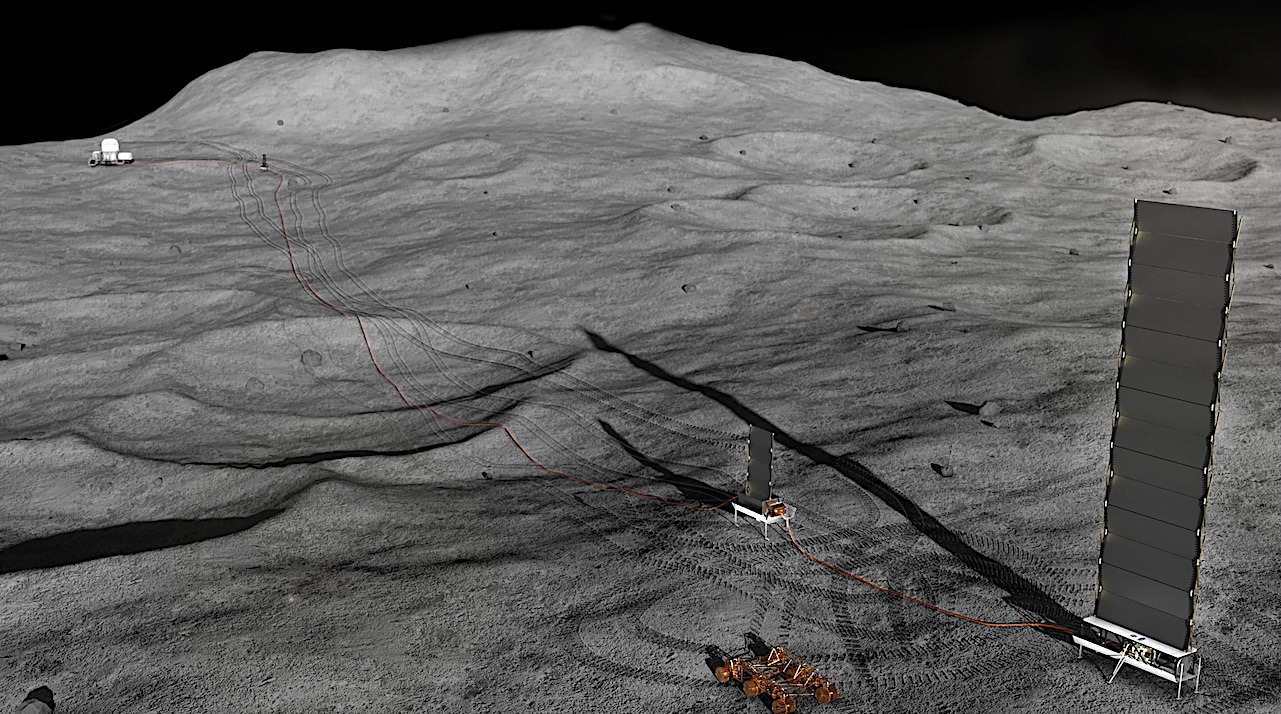
Keith’s Update: below is a copy of a 31 Jul 2025 NASA memo from Sean Duffy titled “Directive on Fission Surface Power (FSP) Development” which says “The FSP project leverages innovation in commercial microreactor technologies specifically referenced in the White House’s 23 May 2025 Executive Order 14299 “Deploying Advanced Nuclear Reactor Technologies for National Security”.” Keith’s earlier note: According to Politico: “Transportation Secretary Sean Duffy will announce expedited plans this week to build a nuclear reactor on the moon, the first major action by the former Fox News host as the interim NASA administrator.” Not that using nukes on the Moon (or Mars) is a bad idea. Its is a smart one. But wait: check the evaporating program of record: NASA lands on the Moon once – skips all the Gateway stuff, cancels SLS/Orion – and nothing else is on the books. When will the reactor be landed? Will there be Americans on site to turn it on and use it? At the pace that Artemis is becoming a collection of notional TBDs, this is like building a boat shed for the speedboat you want to buy for the summer house on the lake that you have not built yet – and cannot afford to visit anyway.
July 31, 2025
TO: Officials-in-Charge of Headquarters Offices
Directors, NASA Centers
FROM: Acting Administrator
SUBJECT: Directive on Fission Surface Power (FSP) Development
Executive Summary
- Fission surface power (FSP) is both an essential and sustainable segment of the lunar and Mars power architectures for future human space exploration missions.
- The FSP project leverages innovation in commercial microreactor technologies specifically referenced in the White House’s 23 May 2025 Executive Order 14299 “Deploying Advanced Nuclear Reactor Technologies for National Security”.
- To properly advance this critical technology to be able to support a future lunar economy, high power energy generation on Mars, and to strengthen our national security in space, it is imperative the agency move quickly.
Background:
- Since March 2024, China and Russia have announced on at least three occasions a joint effort to place a reactor on the Moon by the mid-2030s. The first country to do so could potentially declare a keep-out zone which would significantly inhibit the United States from establishing a planned Artemis presence if not there first.
- FSP directly addresses the top two technology shortfalls listed in NASA’s 2024 Civil Space Shortfall Ranking document: #1 to enable systems to survive and operate through the lunar night; and #2 to provide a source of high-power energy generation for the Moon and Mars surfaces.
- Industry has provided data-driven feedback to NASA that surface power needs are at least 100kWe for long-term human operations including in-situ resource utilization.
- Since 2000, the Agency has invested over $200M towards FSP technologies ranging from 1kWe to 200kWe with no significant advancement towards flight system readiness. The most recent effort was in 2023 with the completion of three $5M industry study contracts, known as FSP Phase 1, focusing on a 40kWe concept. Cost estimates, schedules, and initial concept designs were received.
- The President’s Budget Request (PBR) for FY2026 includes $350M in FY26 for a new Mars Technology program that will accelerate the development of high priority technologies for Mars, (i.e. FSP). This funding ramps up to $500M starting in FY27.
- Significant additional funds will be available as NASA transitions to commercial services for Artemis IV and beyond.
Actions to NASA OICs:
- Within 30 days of this directive, the Associate Administrator (AA) for the Exploration Systems Development Mission Directorate (ESDMD) shall designate a Fission Surface Power Program Executive, who will serve as the empowered and accountable official for end-to-end execution of the FSP effort, including procurement, technology integration, interagency coordination, and performance oversight. The FSP PE is empowered to provide reporting and updates with maximum transparency directly to the Administrator.
- Within 60 days of this directive, ESDMD shall issue a new procurement Request for Proposal (RFP) to industry.
- The Space Technology Mission Directorate (STMD) shall immediately cease any new FSP technology maturation efforts that don’t support the RFP and align available FY25 funding to support the RFP initial award amount.
- ESDMD, through the FSP PE, shall lead the program with support from Office of General Counsel and Office of Procurement. The FSP project shall not exceed 15 Full time engineer equivalents on a yearly basis and a maximum of 10% overhead cost to manage. The project shall adopt a minimum viable structure (MVS) for its management team, composed of essential civil servant roles and supported by flexible, targeted contractor expertise. This structure shall prioritize agility, reduce duplication, and focus on milestone-driven delivery.
- The Partnerships Office is excused from participating in the management and execution of the Space Act Agreement.
This Fission surface power RFP shall feature:
- The ability to award to two providers within six months of the release of the RFP with the option to down-select to one provider at PDR
- Flexibility to industry provider in extent of demonstration capability
Minimum 100kWe power output
Assumed use of a heavy class lander (up to 15 metric tons mass available)
Readiness to launch by the first quarter of FY30 - A closed Brayton cycle power conversion system to reduce risk and ensure extensibility to higher power systems
- NASA’s funded Space Act Authority (SAA) to grant maximum flexibility to industry in how to efficiently design and develop FSP flight systems
- Completion of an operational space flight system and an option for continued sustainment support
- Flexibility to NASA to award contract value based on proposed industry capability, potential industry cost-sharing (i.e., in exchange for industry owning and operating the reactor power once operational), and availability of funds
- Payments via milestones with no less than 25% of the total contract value paid after the successful checkout and delivery of the FSP flight system.
To further advance U.S. competitiveness and lunar surface leadership, NASA shall:
- Empower the FSP Program Executive to make time-sensitive decisions within their delegated authority and adopt streamlined internal approval pathways that prioritize decision velocity in support of critical milestones.
- Prioritize commercial partnerships that propose integrated lander-FSP architectures, ensuring power systems serve as structural and thermal subsystems.
- Define and publish a Standardized Modular Interface (SMI) for FSP systems to ensure compatibility across landers and habitats.
- Encourage dual-use civil and defense operational architectures for deployed FSP systems in coordination with interagency partners.
- Mandate FSP-readiness in upcoming lunar cargo transportation services solicitations, including structural and thermal compatibility requirements.
- Provide priority to power systems capable of supporting ISRU and in-situ manufacturing demonstrations by FY30.
- Assign named accountable project executives for all phases to ensure continuity and leadership.
- Establish key performance indicators (KPIs) and success metrics for each project milestone.
- Require a stakeholder engagement plan to align NASA, industry, and interagency participants, including technical interchange meetings.
- Publish a detailed schedule with key decision points, demonstration readiness reviews, and flight-readiness timelines.
- Include a governance and reporting framework specifying monthly and quarterly review cadences, escalation protocols, and performance tracking.

One response to “Lets Do Nukes On The Moon (Update with Directive)”
Leave a Reply
You must be logged in to post a comment.



Interesting:
“ Significant additional funds will be available as NASA transitions to commercial services for Artemis IV and beyond.”