
Commercial Lunar Payload Services (Update)

 Keith’s note: In case you are interested in other ways that NASA is going to do the Lunar landing thing, this is the NASA Procurement notice for “Commercial Lunar Payload Services – CLPS”
“NASA’s release of a draft request for proposal for the delivery of lunar payloads to the Moon via commercial services is the latest step in the agency’s expanding efforts in Lunar Exploration combined with support for the development of a the commercial space industry. NASA requires transport services to the lunar surface for instruments and technology demonstration payloads. This DRFP is the latest step in a long-running effort by NASA to support the development of commercial lunar capabilities considering the Moon as a destination for future human spaceflight. In the DRFP, NASA seeks to contract with the commercial sector to deliver scientific payloads to the Moon.”
NASA Preproposal Conference for the Commercial Lunar Payload Services (CLPS) Acquisition
In case you missed it, on Friday @NASA released a draft solicitation for Commercial Lunar Payload Services (CLPS). Numerous vendors will compete to carry NASA payloads to the surface of the Moon. Industry Day is Tuesday, May 8. I will be there. @NASAMoon https://t.co/ujvNkxRZDX
— Jim Bridenstine (@JimBridenstine) April 30, 2018
Suggestion @JimBridenstine #CLPS event details are buried inside an oddly named document. Should be more clearly posted at https://t.co/hVuxAZ4waX You could vastly increase awareness of @NASAMoon plans by putting Industry Day on @NASA TV & archiving broadcast for later viewing https://t.co/MYVpipvJDj
— NASA Watch (@NASAWatch) May 1, 2018


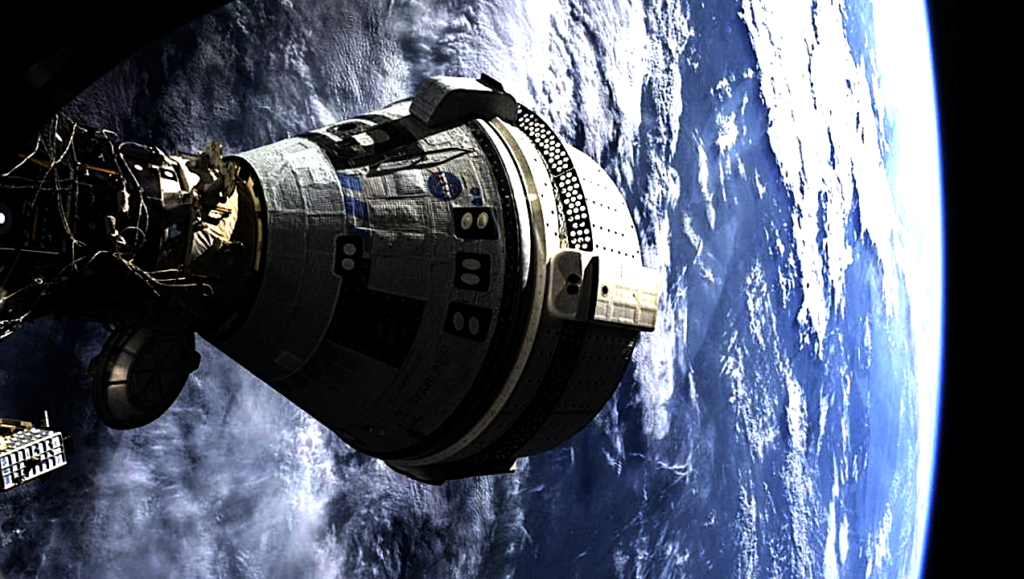



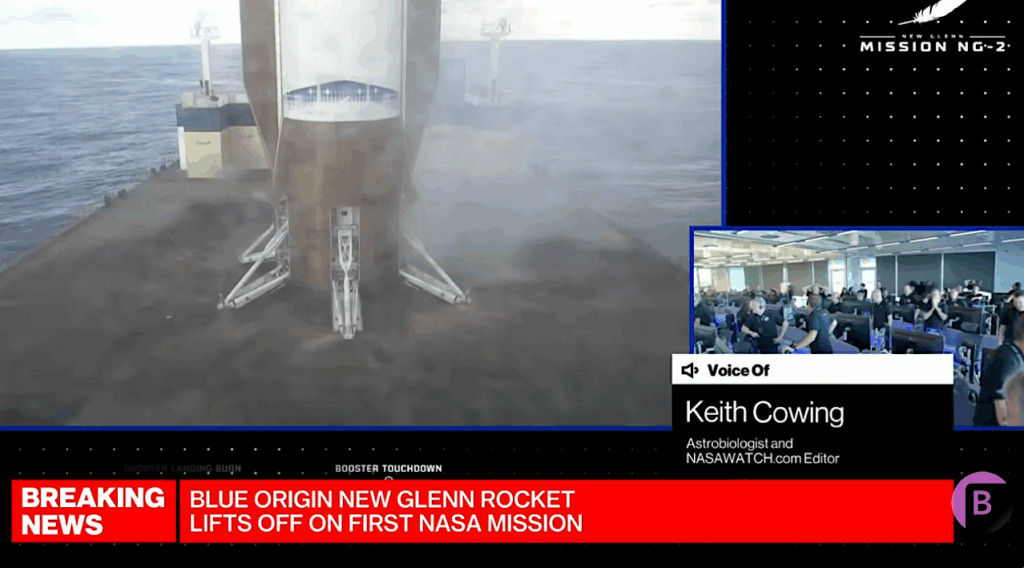

It will be interesting to see if Blue Origin and SpaceX respond and what NASA makes of their plans. Just wondering.
It isn’t what you mean, but I just did a back of the envelope estimate. Launching on a Falcon 9 and using Draco-like engines, you could land 600 to 1300 kg on the Moon (although 100 to 200 kg of that would be the empty propellent tanks.) The range is for landing site versus barge recovery. The NASA webpage I use to get launch vehicle performance doesn’t show the mass for a fully expended Falcon 9.
Of course, you were probably thinking of what sort of quote Blue Origin or SpaceX would give for a New Armstrong or BFR landing. That’s so far in excess of the payload the NASA Request For Proposals asks for, that I doubt NASA would have any idea of how to evaluate such a quote.
Yes, the BFR could deliver the mass equivalent of the ISS to the surface of the Moon, or Mars, in only 3 flights. For about $30 million dollars. It will be a game changer when starts service.
I’m thinking of it from a more modest and more definite perspective. For scientific work or resource prospecting, getting a few hundred to a thousand kilos of payload to the lunar surface for something like $150 million (or less) _is_ a “game changer.” And that’s what could be done with a Falcon 9 launch and a lander which requires no technology development. (I can’t think of a single required system for the lander which doesn’t have off the shelf parts at TRL 6 or higher.) That’s without BFR or anything else which may or may not happen and probably won’t happen on schedule.
Just to clarify…Facon 9 or Falcon Heavy? I know you said F9. Just making sure.
Falcon 9. A fully expended Falcon Heavy would be enough to land something like 4500 kg. Again, that includes landing systems, fuel tanks, etc. not just payload.
Or Masten. Who could at this point probably have a flyable prototype lander ready for test quicker and cheaper than even SpaceX or Blue Origin.
The government continues its critical role supporting our critical but nascent alternative launch industry by providing a destination otherwise not available from any party anywhere.
There’s now a much larger question here than commercial carriage of NASA science/resource-survey payloads to the Lunar surface.
It’s an issue I would have expected to see soft-pedaled for now, but the new Administrator is being right up-front about it: The potential for small commercial robot landers to quickly evolve into larger crew-carrying landers, bypassing the traditional NASA crewed spacecraft development establishment.
Now, bypassing this trad NASA development establishment is no bad thing. At this point in their bureaucratic evolution, it’s a safe prediction that *any* significant crewed vehicle development they attempt will consume tens of years and tens of billions with no guarantee the eventual result will even be usable. Their inability last time to produce a lander any faster or cheaper than that is at the heart of what killed Constellation. I wholly approve of this attempt to bypass them in favor of radically cheaper faster commercial-style development.
But. The last attempt to completely sideline them (the shutdown of Constellation’s Ares 1 and 5) led to a major, major pushback campaign, culminating in Congress mandating the son-of-Ares-5 SLS/Orion, currently eating near half of NASA Human Spaceflight’s budget for the foreseeable future.
Meanwhile, the attempt to bypass this establishment via Commercial Crew is suffering endless delays since that establishment got their ever-evolving requirement hooks into the program. “Safety” is currently being driven ever farther up the steepest part of the diminishing-returns curve at huge expense in time and money.
Bypassing the NASA human spacecraft development establishment is not a task to be taken on lightly, or without major top-level political backing. I expect this brawl to be prolonged and messy.
And very very worthwhile starting and (I hope) winning. But expect fireworks.
It’s not surprising given the interest and background he has with New Space versus Old Space. Don’t forget his CFO is also not part of the Old Space crowd and will see he gets good quality financial data showing him ways to save. It’s was one of his specialities as Treasurer of Arizona, and the difference between someone actually trained in finance instead of Antropology, as the last NASA CFO was.
But he needs to be able to limit the power of the old guard to stop it who will see their careers, and grants limited. The organizational approach would be to create a new Directorate dedicated to lunar exploration and development with a focus on partnering with commercial firms. Bringing ISS into it would leverage its experience with COTS/CCP and give it a new future as the jumping off point for human missions to the Moon.
Then do another Directorate for Mars where you could put all the Mars researchers and allow them to found their traditional methods. You could also put the humans Mars goal and research in this Directorate should they could interact easier with Mars researchers and research missions.
A third Directorate focused on Solar System research will the allow NASA to push the frontiers with missions beyond the Moon and Mars. This way the Outer Planets will get more attention. It would be interesting to compare Triton to what we now know about Pluto. And let’s not forget the clouds of Venus may also harbor life, something we ignore with our basis towards life existing on a planet’s surface.
The Falcon Heavy provides an option for reducing the costs of missions to all these destinations that shouldn’t be ignored.
I’m trying to see what that sort of reorganization would do. Currently, or at least in the FY19 proposed budget, we’ve got directorates or directorate-level line items for Deep Space Exploration, Exploration Research and Technology, LEO and spaceflight operations, and Science. I guess you’re suggesting a merger of the first three, turning them into two directorates (LEO/Moon and Mars), and moving lunar and martian science out of the Science directorate and into the respective, new directorates.
That would actually leave more than the rest of the solar system in the science directorate. They currently have four divisions, Earth Science, Planetary Science, Heliophysics and Astrophysics. Mars science is a program within Planetary as is the new Lunar science program.
I’m not sure what that would accomplish. It might not be good for lunar and martian science. At $200 and $600 million per year each, those programs are on par with cost _overruns_ in some human spaceflight programs. They could easily get raided out of existence. They might also get redirected into surveying in support of human exploration rather than less applied science. They’d probably also get shut out of future Discovery and New Frontiers missions.
For human spaceflight, it sounds like you’re suggesting we make a “New Space” Directorate (for the Moon), with LEO added in to give them commercial cargo and crew. I’m not sure if ISS operations themselves are really “New Space”, but… At the same time, your idea would shunt “Old Space”, in the form of SLS and Orion, into the Mars Directorate, where they can continue to develop those programs into the 2030s without being worse than a budget drain.
I’m not sure how much, if any, of that I’d agree with. But it does have the virtue of rocking the boat and shaking up people who’ve gotten too used to (and dependent on) the status quo.
That is often a function of a proposed reorganization. At the very least it gets folks to thinking about how their group fits into the organization overall mission. This is especially important if NASA tries to go ahead with the LOP-G with their plans to use it for lunar science while continuing with the ISS.
Also, if humans are going to Mars some survey work is needed. I favor the idea of establishing a base on Phobos or Demios before going to the surface. Plenty of shielding and maybe some ISRU opportunities, but we don’t know enough about either one to decide which might be better. But they both offer advantages over a base in orbit or on the surface, at least for the first series of missions.
Perhaps the LOP-G should be skipped and those flights dedicated to establishing a base on the Martian Moons while commercial efforts focus on the Moon missions. Robots should be scouting locations and do prepartions so it’s ready for the first crew to reach the Mars system.
There was a blurb in a report I read recently, would have to dig up the link about SMD and HEOMD being eliminated or pushed into others..
It was a lot easier for the opposition to commercial contracting to sow FUD before the SpaceX flight proven hardware was taking off, landing, and taking off again. And you had go along to get along Bolden as well, perfectly happy to sit back and be Administrator without administrating anything. Times are very different now.
Isn’t this kind of like setting up the Pony-Express before anyone actually lives at the other end to receive any mail? Proactive yes, but a waste of money and time if long term plans for lunar surface don’t get realized.
I can’t find the reference, but I remember reading something about the railroad across Canada. Unlike the railroad across the United States, my understanding is that the Canadian railroad preceded most of the settlements along the line.
Possibly most, but not ALL. And they had a precedent that humans would be migrating to the far cost for a “proven” reason.
I was talking about the transcontinental line, not the whole network. Vancouver wasn’t incorporated as a city until a year after that line was completed. I think it was a matter of assuming Vancouver would become a city and a useful, Pacific port, if the transportation was there. In 1885, it wasn’t obvious that Canada would really need a Pacific port, so that was a bit speculative. My understanding is that the other cities along the way were more a matter of “build it and they will come.”
Victoria was there before Vancouver was incorporated, but the real point is that British Columbia made the railroad connection a condition of entering confederation with the rest of Canada, intermediate communities or not. Plus they had a gold rush! So for the Moon, we need a tough-talking Governor of the Moon and plenty of gold.
So, just got this “New NASA Administrator Jim Bridenstine To Attend
Humans To Mars Summit 2018″–
Given that the space exploration pendulum has swung full cycle, I wonder just what exactly he will tell the Mars community given that in all likelihood, Humans getting to Mars will be pushed out another 30 years from now (just like it always has been). How can he inspire an existing community to keep the course, much less develop the inspiration and drive in younger folks, filling the need to get new blood into the aging planetary community. I highly doubt he is half as inspiring as Carl Sagan was for me as a high-school student in Colorado the early 1980s.
Space advocates demand NASA have a specific goal for HSF so Mars is set to satisfy their demands but no need to do anything serious in the meantime.
You don’t seem to understand the amount of time and money wasted on this uncommitted, frivolous, wishywashy, dare I say apathetic, behavior over the past 35 years or so. No one seems to care about that. AND nothing is going to change.
It’s hard to do something “serious” when Ares and then SLS have been eating up so much of the manned spaceflight budget. Those (expendable) programs were so slow and so inefficient that they’ve been outpaced by “commercial” launch vehicle development (some of which include reuse of some of their components).
Case in point, that picture of the two Falcon Heavy boosters landing simultaneously on landing pads will almost certainly become iconic. SLS, on the other hand, will dump its SRBs and its core stage (with four SSSEs attached) into the ocean on every flight. That contrast is inescapable.
I think the twin landings by the Falcon Heavy boosters were iconic before they happened. Haven’t I seen something very similar in a science fiction movie or on the cover of a book or magazine? I’m fairly sure that image has been used more than once, and long before Falcon Heavy was even a concept. What’s impressive is that SpaceX actually made it happen in real life.
My interpretation of this is instead of NASA R&D on new technologies, they offer contracts for private companies to do the R&D. Though it’s been like that for many years but eventually become like FEMA where NASA only distributes funds (and not do anything technical)?