
SpaceX Starship Launch Delayed
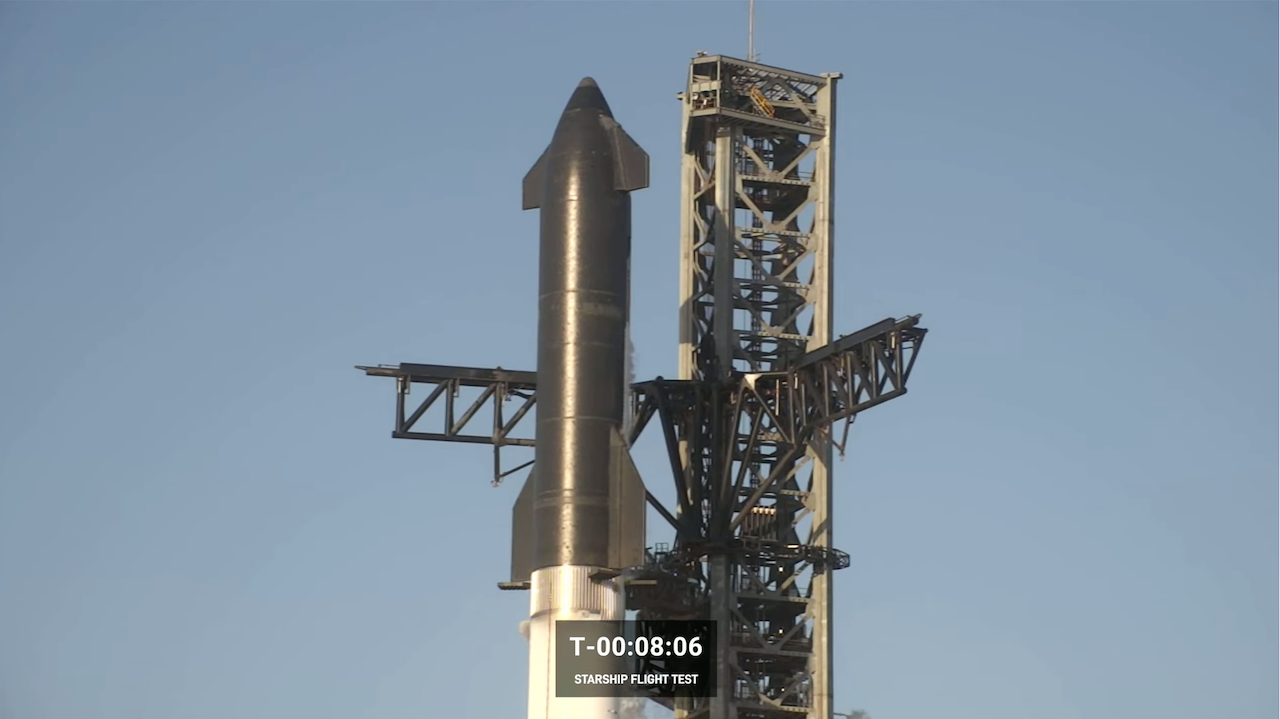
Starship on the launch pad
SpaceX
Keith’s note: The first launch of SpaceX Starship was halted on monday 17 April 2023 after a pressurization issue arose in the first stage. SpaceX decided to continue with the preparation – as a “wet dress” down to the T-0:10 mark so as to allow its team to exercise its procedures. The next launch attempt will likely be in 48 hours be on Thursday 20 April according to SpaceX. When the launch occurs – successful or not – this will mark a tectonic paradigm shift in how we access space. There is no indication that NASA understands what is about to happen. More

7 responses to “SpaceX Starship Launch Delayed”
Leave a Reply
You must be logged in to post a comment.
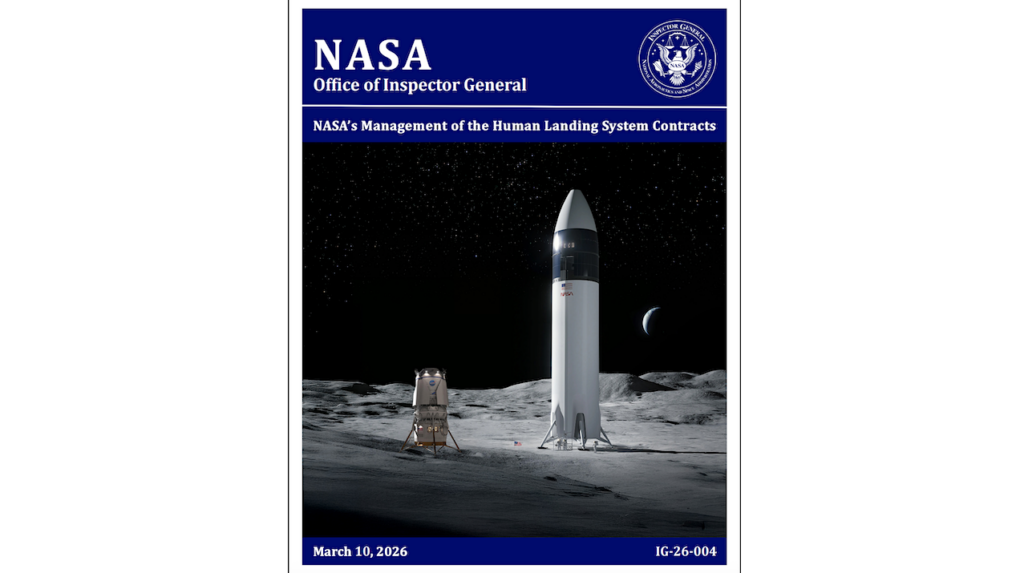





I think many in NASA understand what a successful Starship system means. It is, after all, part of Artemis.
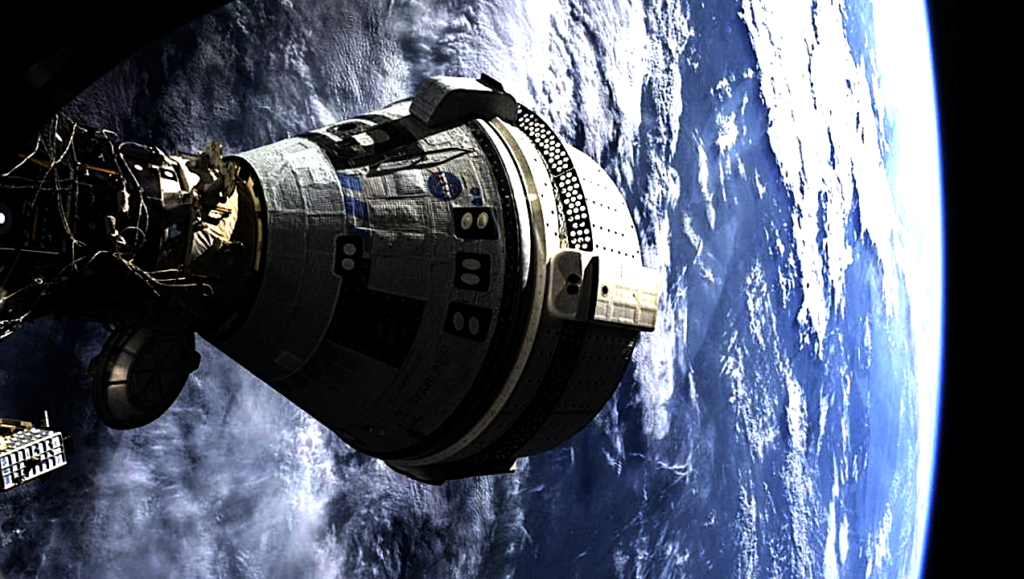
Congress, HQ, and the rest of the administration mostly don’t. And when it works and the budget gets tight, SLS and Orion are toast.
While it might be part of Artemis for getting astronauts to the surface it opens up far more than that . The question is how open minded and imaginative can folks get when they start realizing what 9m fairing diameter and at least 9m tall and tens of tons to anywhere
The large telescopes or other science observatories not to mention getting to locations faster if the ship fuels up in orbit before burning for the outer planets with it’s payload.
As for Artemis long term the delivery of large scale heavy payloads to the moon will be impactful if NASA actually opens up the surface infrastructure.
SLS and Orion would be among the last things to receive cuts if NASA’s budget was cut.
Such large cuts are not happening anyway, at least not very likely.
At worst the budget would remain stagnant to previous FY levels, which is more than survivable, even if not ideal.
Starship wouldn’t be a viable replacement for either vehicles, regardless, they are here for the long run.
Watch for the EPOC contract coming soon.
No, they don’t know what it means. It will effectively be the beginning of the end for NASA. If Starship works as advertised, it will cost around $10 million to put 150 ton payloads into LEO. Space will become fully accessible to corporations, universities, and individuals. Spacesuits will be designed and built, habitation modules constructed like modular homes, and deep space vessels built by the world’s wealthy at a cost cheaper than today’s mega yachts. People will begin spreading out to all corners of the solar system by mid century, and NASA will be left scratching their heads as to why no one is using SLS.
I think you are correct. NASA has enjoyed its monopoly on space access, especially for humans in space, for the last 65 years. And NASA’s contractors enjoyed it too, hoodwinking the taxpaying public for billions. Remember NASA fought off the DOD. NASA fought off upstarts like Faget’s Industrial Space Facility. But NASA cannot fight off a guy who’s personal wealth is 10-20 times NASA’s annual budget.
Musk figured out that designing and building rockets and spaceships is no more difficult than designing and building the typical airliner. Musk figured out that flying the typical spaceship is no more difficult than flying a high performance drone. Its the same laws of physics; its the same technologies.
NASA pulled the wool over the eyes of Congress and the public for sixty years; if the US wants a competitive space industry, it has to be done differently than how NASA operates. NASA started out positively in the 1960s but human spaceflight has suffered with NASA’s management for too long.
StarShip is at present a significant part of Artemis, as rktsci says, however in reality it makes Orion, Gateway and SLS totally unnecessary and wastes billions of taxpayer dollars. If you look at a scale picture of StarShip next to Orion and Gateway, you see those two are dwarfed.
Yes, space can be inspirational and educational, and will be an important part of the aerospace economy, but NASA’s management and methods are disillusioning.
What you have to remember is that NASA is a government jobs program, that just so happens puts things into space every now and then. NASA doesn’t spend money to build rockets, they build rockets to spend money. If they never had to launch another mission again, it would be just fine by them so long as the funding keeps rolling in, and the politicians will make certain of that.
Well somebody at NASA must have some understanding since between 2020 and 2023 NASA provided $4.2B of Starship funding. There may have been more, but that’s what a quick Google turns up. Given that Musk estimated development costs at around $6B, seems like NASA is pretty heavily involved. Although the $6B is likely an underestimate.