
Update On Starliner's Flawed Debut (Update)

NASA Provides Update on Commercial Crew Program, Close Call Review of Boeing’s Orbital Flight Test
“NASA will host a media teleconference at 2:30 p.m. EDT Tuesday, July 7, to discuss the outcome of its High Visibility Close Call review of the December 2019 uncrewed Orbital Flight Test of Boeing’s Starliner spacecraft. Participants in the briefing will be: Kathy Lueders, associate administrator of NASA’s Human Exploration and Operations Mission Directorate and Steve Stich, manager of NASA’s Commercial Crew Program.”
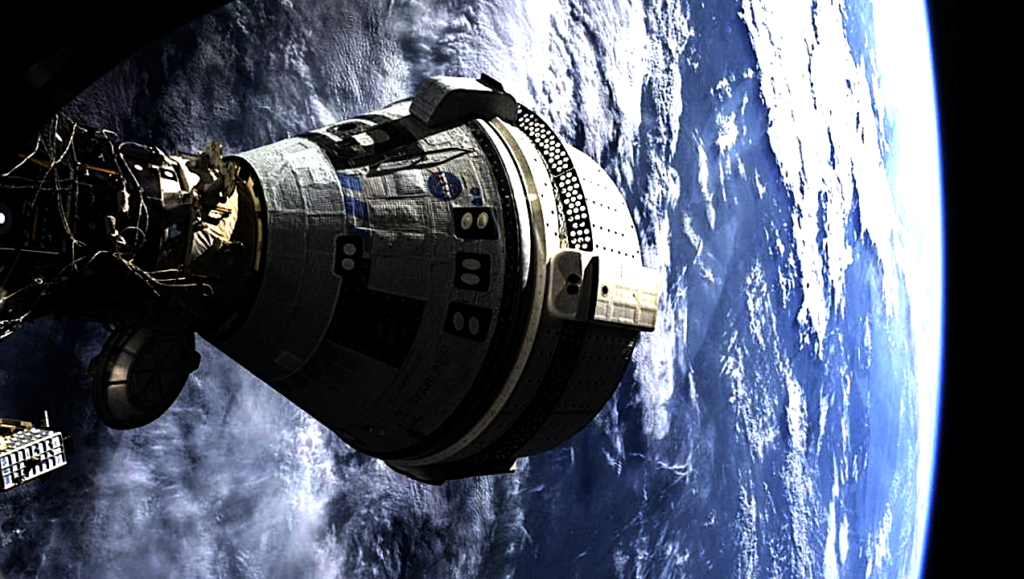
 Keith’s update: NASA had a telecon with HEOMD AA Kathy Lueders and Steve Stich, manager of NASA’s Commercial Crew Program. In a nutshell they have completed their report on the problems associated with Boeing’s Starliner OFT-1 flight, have 81 recommendations that need to be implemented. No firm date for the re-flight OFT-2 for Starliner were offered other than maybe by the end of this year. In essence the NASA/Boeing processes broke down and an extensive review was made to be certain that “no stone went unturned” – as had been directed by Lueders’ predecessor Doug Loverro.
I asked: “You only discovered that you had major problems with Starliner after the vehicle was actually in flight. The NASA/Boeing preflight process clearly failed in this regard. Yet things like this did not happen with SpaceX. Why did the NASA/SpaceX process work so well when it did not work very well with Boeing? Shouldn’t the NASA process be the same for both contractors or are they that different from each other that different approaches are required? Given that SpaceX seems to have a better handle on this are NASA/SpaceX lessons learned being applied to the NASA/Boeing process to get them up to speed?”
Some intersting answers resulted. Stich admitted that when one spacecraft provider comes forth with a newer approach (SpaceX) than another (Boeing) people naturally tend to pay more attention to the new approach. “Perhaps we did not take the time we needed to in hindsight. We learned a lesson and we will be applying those lessons equally.” Stitch admitted that NASA probably felt somewhat more comfortable with Boeing’s more traditional approach and as a result so SpaceX may have had more oversight since they had a newer approach. “This is a wakeup call for NASA and all of its contractors and they all want the lessons learned.”





Good question. Interesting answer.
I’d distill the answer down to “We trusted Boeing and its methodologies due to our long history together. But, we didn’t trust SpaceX right away since they’re newer and we have less of a history with them.”
This highlights the danger of a government agency getting too cozy with a government contractor and letting oversight become lax. I’d say that SLS has this in spades. Why else would NASA have given maximum bonuses despite the several years of schedule slip?
It also illustrates the weakness of government driven markets. Governments are more likely to pick the “safe alternative” from a “known” source than the risky one from a new “source” to invest limited public funds in.
An ‘apples and oranges’ comment, Thomas: SX gets nowhere near the criticism that would befall NASA had NASA experienced, for instance, the COPD tanking issue, or the recent fire because of a hose connection, or…
A governmental program has millions watching, all feeling entitled as taxpayers, all ready with snarky assessment.
The problem was that all the FSW expertise walked out of the door after Shuttle. From the FSW folks who maintained the code, to the folks who maintained and operated the SAIL. I guess Boeing and NASA operated under the assumption that all this expertise was still in house.
Good point. The experience that was lost when the entire USA workforce was laid off was beyond anything in my experience.
Great question Keith! Thank you for holding NASA and Boeing accountable.
Increasingly Space X is leaving legacy space in the dust. If Space X gets Starship with Super Heavy to orbital flight and we are still waiting for Boeing to do its first successful uncrewed flight to the ISS then that might mean that Space X has an insurmountable lead.
Starship? Not going to happen. Now, Crew-1 before OFT-2? That’s a different animal.
I also predicted Space X would have 2 crewed flights before Boeing successfully completed its uncrewed demo one flight to the ISS, but that now seems like a sure thing so I felt I had to make a more dramatic prediction. Boeing recently pushed back its unmanned flight to the 4th quarter so both Boeing for Starliner and Space X for Starship have a goal of this year. Space X has a higher hill to climb, but it seems like it is running faster.
Thanks for asking the question, Keith.
This is even though Boeing got substantially more money for the same task.
Another take,
https://twitter.com/nextspa…
https://twitter.com/SpcPlcy…
I do hope that there is an at least all-managers but ideally all hands video-call by Boeing’s top faces in the space division, telling all sections in all projects that this is never happening again: That never again will a flawed or insufficiently-tested product, be it an airliner or a spacecraft, roll past those doors.
This was a casualty of letting all of the Shuttle FSW folks walk out of the door.
No, this is a theme running throughout Boeing . If Boeing was so experienced at this Starliner should have flown years ago along with SLS. Space is hard but with Starliner and SLS they are working with known systems, this stuff had all been done before.
Should have selected DreamChaser a much more capable craft then Starliner. NASA better not be pay anything for this retest. Boeing can no longer be trusted.
So, basically Boeing was waved through the pre-flight review process with reduced scrutiny because ‘everyone knew’ they were safer than SpaceX and therefore didn’t need it. Is that basically what is being said here?
and I am sure there were Boeing people patting those NASA people on the back as they ushered them out the door telling them they have nothing to worry about Boeing has this covered.
It doesn’t matter if a contractor is new on the block or an established one, NASA oversight should be applied equally to both. Strong and detailed oversight.
A great question. This is nothing new. Boeing was like this on Space Station. SpaceX gets more attention because Boeing said no. Ask why did NASA IV&V miss Boeing software errors? That’s the only thing they live for. No one looked and they had a team of people charging for the work.
Some years ago, after half a decade of NASA IV&V finding major software errors on space station suddenly, one day Boeing wrote perfect code. Not one error was found or reported for 3 over years. How? They got ride of the IV&V people making issues of code errors and put in people who just wanted a paycheck. Even up the point of faking independent testing. That not only makes them useless, it made them dangerous. Boeing just said no.
That our Boeing found CTS-100 code errors so fast (in flight ) indicates how blatant the problems are. It shows fundamental flaws in management, systems engineering, code and test. It also shows some 1st class engineering talent begging to be led. Basically, facts and quality take a back seat to schedule and cost. Nothing new.
That NASA will admit they are that close to a contractor tells me its time to change the agency.
No one at NASA will standup to Boeing. Accountability is not what its about. How do I know? I found errors in Boeing code on space station, severity one and two – we saved the tax payer about one billion dollars finding basic flaws before flight. I saw it for myself.
Fly SpaceX – they care.
“No one at NASA will standup to Boeing. Accountability is not what its about. How do I know? I found errors in Boeing code on space station,”
Did you hold them accountable and report this to news outlets?