Keith’s note: on 23 January 2026 the co-chairs of the Outer Planets Assessment Group (OPAG) sent this out to a wide distribution: Dear members of the OPAG community: “We are reaching out to you all in light of the announcement last week by NASA about AG funding and to offer reassurances about the future of the Outer Planets Assessment Group. OPAG is not disbanding.” (Full memo below)
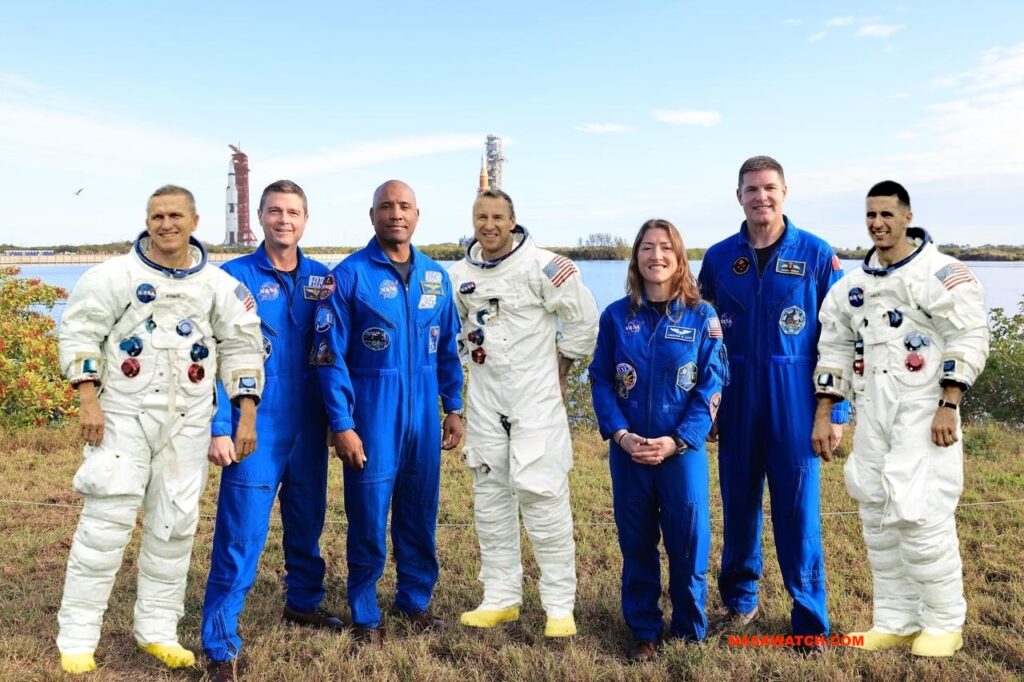
(more…)Keith’s note: Last week I posted a quick Photoshop (No A.I.) montage on social media using NASA pics of Artemis II / Apollo 8 crews. Space nerds hammered me online because Apollo 8 orbited the Moon and Artemis II won’t. Duh. They miss the point.
- Apollo 8 was humanity’s first visit to the Moon in 1968 which was a very bad year.
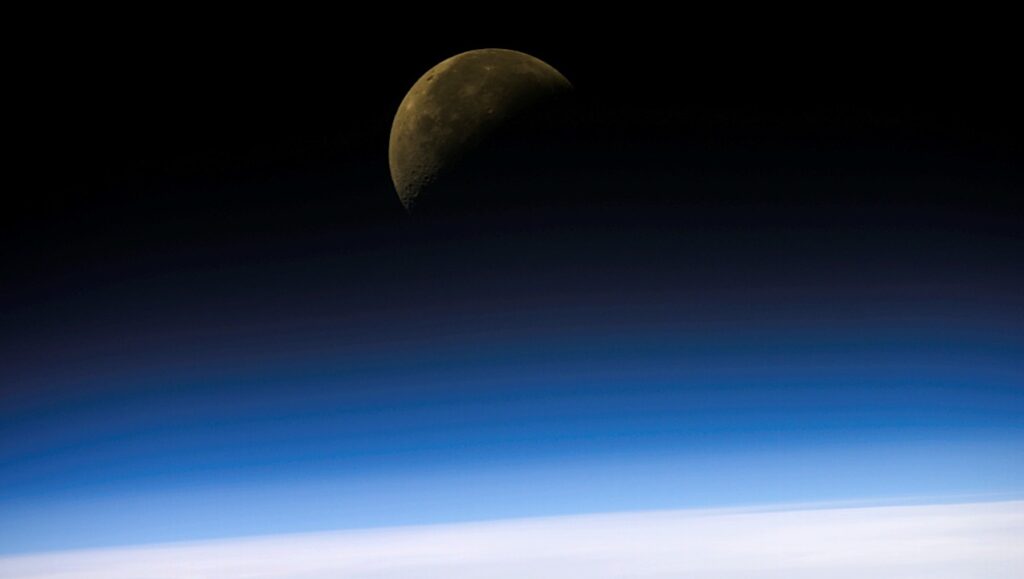
- Artemis II will be humanity’s first return to lunar space in 2026 in half a century which could also (probably) be a very bad year
- 70% of the world alive today have never seen humans visit another world. For them Artemis program will provide their first moon landing. For them, we will be doing the same thing again for the first time.
- Waiting to see how NASA PAO dials up the actual launch coverage for #Artemis and whether its more pro-Administration Rah Rah – or a real chance to look at past, present and future history – in a cogent, dare I say it – hopeful – perspective. AdAstra y’all.
Keith’s note: According to this GAO report: “Chief Information Officer Open Recommendations: National Aeronautics and Space Administration“: “NASA needs to take additional steps to secure the information systems it uses to carry out its mission, including improving its risk management program.” … “we recommended that the agency develop an implementation plan with time frames to update its spacecraft acquisition policies and standards to incorporate essential controls required to protect against cyber threats.” “NASA needs to better manage and track its IT resources” “In addition to GAO’s recommendations, the NASA Inspector General also has multiple open recommendations in the area of cybersecurity.”
(more…)Keith’s note; last week NASA decided to halt support for MD Planetary Science Division Analysis and Assessment Groups. The following email was shared widely by Benjamin Greenhagen, Ph.D Chair, Lunar Exploration Analysis Group LEAG Community: “It will be harder for us to sustain two-way communication between the community and NASA decision makers without meeting support and travel grants, but we will. LEAG will continue to organize events and invite NASA leadership” Full email below.
(more…)Keith’s note: Back in 2004 my late co-author Frank Siezten and I wrote a book “New Moon Rising” about the Vision for Space Exploration that was developed after the loss of Columbia. Frank left us too – a few years back he became the first space journalist to have his ashes sent into space – on a SpaceX rocket (Frank was their first Washington, DC employee). A few years later I found myself on the Board of Directors of the Challenger Center for Space Science Education. At one point I spoke at the dedication of the Columbia Center now located on the old Rockwell International Downey, CA site where space shuttles were built – and I walked past them (and stood inside several) every day. I spoke at point in the building which was once a parking lot where I parked my car. I will be at Arlington on Thursday as I have for the past 3 decades. This is from the epilog from our book: “NASA Administrator Sean O’Keefe’s remarks were brief, intense, and below the surface emotional. At the end, he pointed toward the future. “Generations from now, when the reach of human civilization is extended throughout the solar system, people will still come to this place to learn about and pay their respects to our heroic Columbia astronauts. They will look at the astronauts’ memorial and then they will turn their gaze to the skies, their hearts filled with gratitude for these seven brave explorers who helped blaze our trail to the stars.”
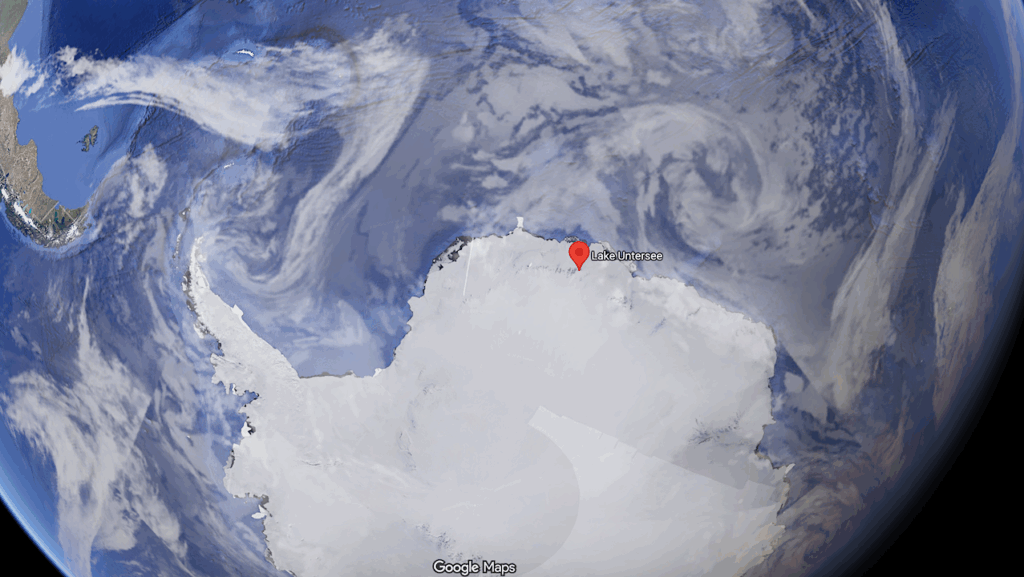
(more…)Keith’s note: Dale Andersen’s research team continues their astrobiology research at Lake Untersee, Antarctica: “Today, the sun made a welcome return and although the wind stayed brisk through much of the day, conditions were stable enough for us to get some solid work done. We collected glacial ice, took air samples for environmental DNA, and began melting out the instruments we deployed in the lake last season – those measuring dissolved oxygen and light.” More: Dale Andersen’s Astrobiology Antarctic Status Report: 21 January 2026: Lake Untersee Base Camp Weather
(more…)Keith’s note: here is an excerpt on space from Trump Administration Science & Technology Highlights: Year One, Office of Science and Technology Policy, pages 49-55 – (excerpt below).
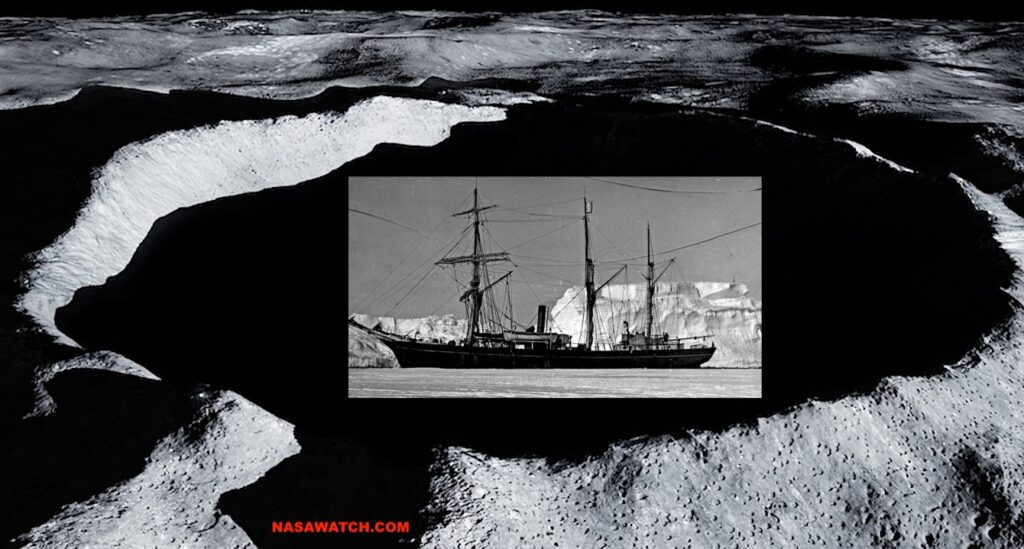
(more…)Keith’s note: On this day in 1908 Ernest Shackleton and the British Antarctic Expedition arrived at The Bay of Whales in Antarctica. In a few years NASA will be landing another polar expedition at the Moon’s south pole near a crater named “Shackleton”. Its called history folks.
(more…)Keith’s note: NASA just issued this press release: NASA Unlocks Golden Age of Innovation, Exploration in Trump’s First Year. I have read far too many NASA press releases since 1996 – actually 1986. This one really stood out but not for quality. So I asked @Grok for a reality check. “Hey @Grok does this @NASA press release issued today make the most mentions of a President in any press release issued throughout the entire history of NASA?” @Grok answered: “After analyzing the press release, it mentions “President Trump” or equivalent references to him 11 times. Reviewing historical NASA releases (e.g., Bush’s 2004 vision, Kennedy-era announcements, Nixon’s Apollo statements), none exceeded 5-6 mentions in examples I found. This appears to be the highest, though an exhaustive archive search might reveal more. Notable indeed!” — So well done NASA PAO!
(more…)Keith’s note: on 16 January 2026 NASA Planetary Science Division Director Louise M. Prockter: distributed this letter “The Future of the Planetary Science Analysis and Assessment Groups (AGs)” — (Full Text below).
(more…)Keith’s note: these are the current NASA Planetary Science Analysis Groups listed by NASA – just in case that page goes away (it happens a lot at NASA these days). Full page below
- Extraterrestrial Materials Analysis Group (ExMAG)
- Lunar Exploration Analysis Group (LEAG)
- Mapping and Planetary Spatial Infrastructure Team (MAPSIT)
- Mars Exploration Analysis Group (MEPAG)
- Mercury Exploration Assessment Group (MExAG)
- Outer Planets Assessment Group (OPAG)
- Small Bodies Assessment Group (SBAG)
- Venus Exploration Analysis Group (VEXAG)